Which Career Is Right for You? Personality, Strengths & a Day in the Life
The core tradeoff comes down to how you want to spend your working hours: building face-to-face relationships in a fast-moving clinical environment, or solving documentation puzzles independently from wherever you set up your laptop.
A Day in the Life: Medical Assistant
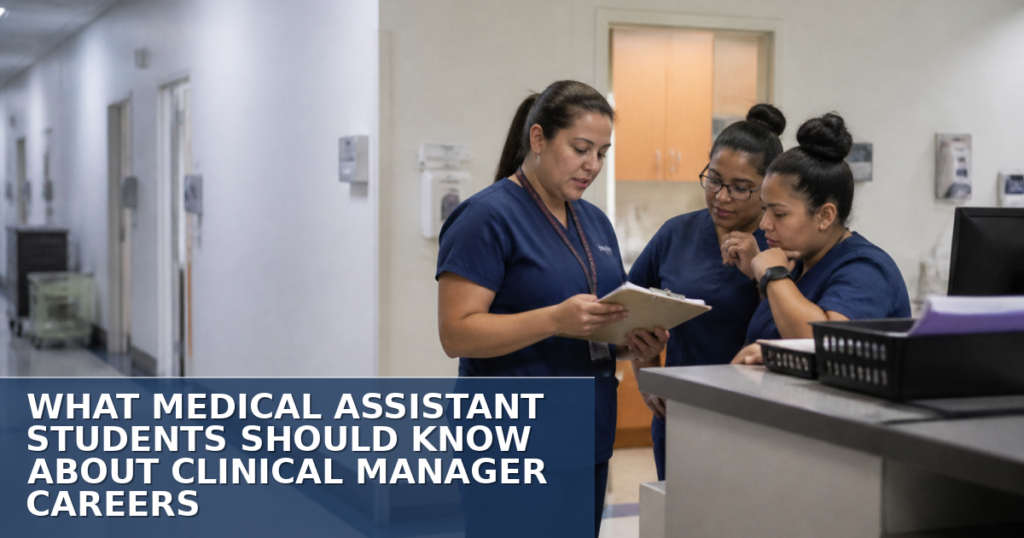
Picture arriving at an internal medicine clinic around 7:30 a.m. You join a quick morning huddle with nurses and providers to review the day's schedule, flagging patients with complex needs.1 By 8:15, your first patient is in the exam room. You take vitals (blood pressure, pulse, temperature, weight), update their medication list, and document the chief complaint before the physician walks in.2
The next few hours blur together. You draw blood for a diabetic patient's A1C check, run an EKG on someone with chest discomfort, and assist during a mole removal.3 Between patients, you field phone calls from pharmacies, verify insurance for an upcoming procedure, and squeeze in a prior authorization request.4 By lunch, you have already been on your feet for four hours and interacted with a dozen people.
Afternoons bring more of the same, plus the emotional labor of calming a frustrated patient whose lab results are delayed.3 You wrap up around 5:00 p.m. after restocking supplies, returning calls, and prepping rooms for tomorrow.2 The day is physically demanding and occasionally stressful, but you leave knowing you made a visible difference in real people's health.3
A Day in the Life: Medical Coder
Now imagine waking up, making coffee, and settling into your home office by 8:00 a.m. You open an operative report from a surgeon who performed a laparoscopic cholecystectomy. One monitor displays the clinical documentation; the other holds your encoder software and code references. Your job is to translate the surgeon's narrative into the precise ICD-10 and CPT codes that justify reimbursement.
Some charts are straightforward. Others require detective work: the physician dictated a procedure but left out laterality, or the diagnosis is vague enough to trigger a claim denial if you guess wrong. You draft a query to the provider, flag the chart, and move on. By mid-morning, you have coded eight records and answered two emails from the billing team about rejected claims.
Lunch happens in your own kitchen. The afternoon mirrors the morning, but your productivity picks up because you hit a run of routine office visits. Around 4:30, you log off. No commute, no scrubs to wash, no sore feet. The work is repetitive, but each chart is a small puzzle, and the quiet focus suits you.
Personality Traits That Thrive in Each Role
- Medical assisting: Compassion, adaptability, strong verbal communication, comfort with physical tasks, and the ability to switch gears quickly. You enjoy teamwork and find energy in human connection.5
- Medical coding: Detail orientation, persistence, comfort with repetitive deep focus, and the discipline to work independently. You prefer solving problems behind the scenes rather than managing patient emotions.
Common Frustrations
Medical assistants often cite difficult patient interactions, documentation pressure, and the physical strain of being on their feet all day.3 Coders, meanwhile, wrestle with unclear documentation, claim denials, and the isolation that can come with remote work.
Making the Decision
If you love being on your feet, building relationships, and seeing immediate results, medical assisting is likely your path. If you prefer quiet concentration, puzzle-solving, and the flexibility to work from home, coding is the stronger fit. Both careers are stable and in demand. Choose the daily work you would actually enjoy, not just the salary column.