Most important takeaways…
- Employers expect entry-level cover letters to prove readiness, not experience.
- Retail and customer service skills transfer directly to medical assisting roles.
- Keep the letter between 250 and 400 words on one page.
Real examples and practitioner tips for turning school, externships, and transferable skills into a hire-worthy letter.
Medical assisting is one of the fastest-growing allied health roles in the country, with the U.S. Bureau of Labor Statistics projecting well above-average job growth through 2033 and most postings asking for a certificate or diploma rather than years of prior clinical work. That matters because the applicant pool for entry-level openings is wide, and hiring managers routinely ask medical assistant interview questions to screen candidates whose only clinical exposure is a program externship.
The practical tension for a no-experience applicant is credibility: how do you signal readiness without overstating what you've done? A cover letter that names your training, medical assistant certification timeline, and transferable skills in concrete terms usually clears that bar. Front desks, retail, caregiving, and unfinished coursework all count when framed accurately.
Hiring managers don't expect an entry level medical assistant to have years of hands-on experience, and they aren't looking for a resume in prose form. Your cover letter's job is to prove you are ready to learn and perform, not to apologize for what you lack.
You do not need to hide the fact that you are new. A single sentence like "While I am entering the field with limited direct medical assisting experience, my recent externship and front-desk work prepared me to handle patient intake and vital signs confidently" is enough. Then spend the remaining space showing what you can do. Dwelling on the absence of experience makes the letter about your past, not the employer's needs.
A strong entry-level letter relies on four parts: - Enthusiasm: Show genuine interest in the specific clinic or specialty. - Transferable skill evidence: Give one or two concrete examples from past jobs, school, or volunteer clinical experience. - Certification/education status: State your medical assistant training program, expected graduation, or certification in progress. - Clear call to action: Ask for an interview or say you will follow up.
Saying "I am passionate about healthcare" is forgettable. Saying "I noticed your clinic serves a large Spanish-speaking population, and my conversational Spanish plus medical terminology course would help me support those patients" shows you researched the employer. Hiring managers can spot a copy-paste letter instantly, so tailor one or two sentences to the clinic's stated mission, patient population, or services.
The tension with an entry-level cover letter isn't length versus substance, it's confidence versus honesty. You want to sound capable without pretending you've done the job already. The fix is a tight, predictable structure that lets your training and character carry the weight instead of a job history you don't have yet.
Every strong version follows the same skeleton:
Experienced candidates often use three or four paragraphs to cover multiple jobs. You don't need that. One paragraph on your clinical or academic training (externship, coursework, clinical medical assistant certification progress) and one on transferable skills (customer service, teamwork, attention to detail) is plenty. Stretching further usually means repeating yourself.
Students still finishing a program should lead with expected completion dates and medical assistant externship hours. Career changers should open the hook with the transferable skill, not the old job title, then connect it to patient care. True beginners with no healthcare background at all should spend slightly more of the body paragraph on soft skills and reliability, since that's the strongest evidence available. The bones stay the same; only the emphasis shifts.
A busy retail shift and a fast-paced clinic check-in have more in common than they appear to, which is good news if you are writing a medical assistant cover letter with no direct experience. Employers rarely expect entry-level candidates to arrive with phlebotomy or EKG skills already mastered. What they do look for, according to recent cover-letter guidance from recruiters and practice managers, is evidence that you can learn quickly, stay calm, and communicate with people under pressure. Transferable skills become your proof.
Service orientation, active listening, and the ability to read a room map directly onto patient interaction. If you have worked a register, handled complaints, or managed a rush, describe those moments as clinical-adjacent strengths. Multitasking during a lunch rush is not far from the multitasking involved in many medical assistant duties.
Appointment scheduling, insurance verification, prior authorizations, and referral coordination are all learnable on the job, but hiring managers respond well when candidates already show organization and attention to detail. If you maintained calendars, verified information, or followed privacy rules in an office, frame that as medical office assistant duties.
Recruiters often describe a first-paragraph scan of about 20 to 30 seconds. So vague claims like "hard worker" or "fast learner" get skipped. They look for short, concrete medical assistant resume skills that tie a past duty to a medical setting. One clear operational metric or a specific workflow tends to stand out more than a list of adjectives.
Each starting point calls for a different opening line: beginners lean on people skills, career changers translate past work into clinical value, and students spotlight coursework and exam timing.
Knowing which asset leads lets you build the whole letter around it instead of listing everything and diluting your pitch.
A reference to the practice's specialty, patient population, or values shows you researched them and keeps the letter from reading like a template.
A brief story, like calming an upset customer or completing an externship task, turns a generic skill claim into something an employer can picture and trust.
How do you write about a medical assisting program you haven't finished yet, or an exam you haven't taken, without sounding like you're stretching the truth? The answer is precise, candidate-appropriate wording that signals progress instead of implying credentials you don't yet hold.
Before you finish clinical hours, describe the program itself, not the credential you're working toward. Clean wording looks like this:
Naming the accreditor matters because a verified medical assistant program accreditation signals training quality and exam eligibility. Leave it off only if your program isn't actually accredited by one of the two.
You are not certified until you pass, so keep these medical assistant certification exam tips in mind when you schedule. Until then, the safest conventions are:
Never put "CMA (AAMA)" after your name in a signature, email, or letterhead until you've actually passed. AAMA specifically prohibits using the initialism after expiration until you recertify, and the same logic applies before you've earned it in the first place.
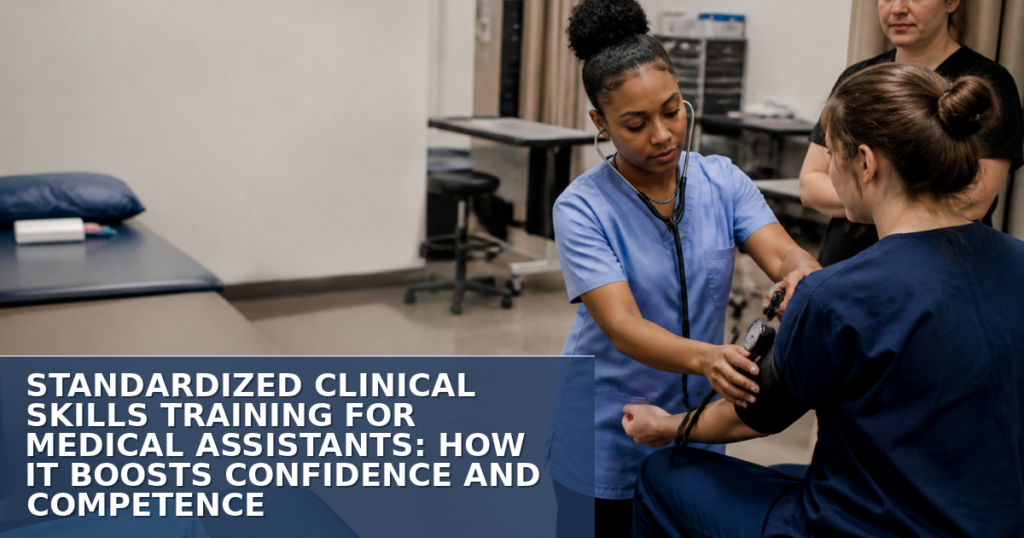
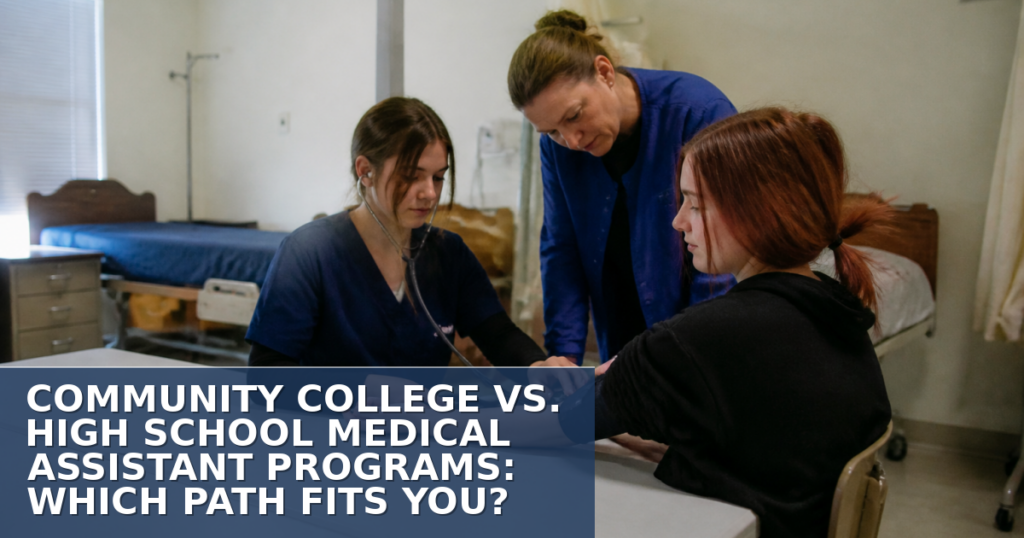
An externship in progress or on the calendar is not a gap, it's clinical exposure the employer can count on, and it helps you meet medical assistant externship requirements at the same time. Try: "Currently completing a 160-hour externship at [site type, e.g. family medicine clinic], scheduled through [month year]," or "Externship begins [month year], rooming patients, taking vitals, and assisting with EHR documentation."
Prepared phrasing states a date, a setting, and a scope. Uncertain phrasing hedges with "hoping to," "planning to," or "looking into." Pick a date, name the site, and describe the work.
The tension here is simple: you need to sound confident without overstating credentials you do not yet have. Your opening paragraph is where hiring managers decide whether to keep reading or move on, so every word must earn its place, just as it does on an entry level medical assistant resume.
Structure your opening around three elements: who you are, why this clinic specifically, and what you bring. A strong opener might read: "As a recent graduate of ABC Community College's medical assisting program, I am drawn to Riverside Family Practice's focus on underserved populations. My externship at a high-volume urgent care center taught me to stay calm during patient surges while maintaining accurate documentation."
Compare that to a weak version: "I am writing to apply for the medical assistant position. I am a hard worker and a team player." The first version names the employer, connects to their mission, and offers a concrete skill. The second could apply to any job anywhere.
Addressing your letter to "Dear Hiring Manager" is acceptable, but using the actual name signals effort. A quick LinkedIn search or phone call to the front desk often turns up a name. When you open with "Dear Dr. Patel" or "Dear Ms. Torres," you demonstrate the same attention to detail clinics want in patient intake.
If you are making a medical assistant career switch, name your most transferable skill immediately. A former retail supervisor might open: "Five years managing a busy pharmacy counter taught me to juggle customer concerns, insurance questions, and inventory accuracy simultaneously." That sentence reframes retail experience as clinic-ready competence before the reader mentally files you as unqualified.
You do not need paid medical assistant experience to write a focused cover letter. Follow this sequence while you draft, and customize each step to the specific clinic and job posting.

Three job seekers can send three very different letters for the same posting and all three can work, because the persuasive job of a no-experience letter changes depending on what you're actually explaining. These condensed versions trim each letter to its essentials so the structure is easy to see.
Dear Hiring Manager,
I recently completed my medical assistant training at [Program Name] and am eager to bring my clinical foundation and patient-first mindset to your practice. During my medical assistant externship at a family medicine clinic, I roomed patients, took vitals, and documented in the EHR under supervision, consistently receiving feedback for accuracy and calm bedside manner. I'm detail-oriented, comfortable with fast-paced environments, and genuinely excited to start my career at [Clinic Name].
The line doing the heaviest lifting: "consistently receiving feedback for accuracy and calm bedside manner." It converts a training placement into evidence of workplace behavior, which is what employers actually worry about with brand-new hires.
Dear Hiring Manager,
After eight years in retail management, I completed my medical assistant certificate this spring because I wanted work that combined people skills with real impact on someone's day. In my last role, I managed a team of twelve, resolved customer issues under pressure, and kept accurate records for inventory audits with zero discrepancies over two years. I'm now applying that same reliability and composure to patient care, and my externship at an urgent care clinic confirmed I thrive in that setting.
The heaviest-lifting line here: "zero discrepancies over two years." It's a concrete, verifiable number that signals the same precision clinics need in charting and medication logs, even though it comes from a completely different industry.
Dear Hiring Manager,
I am completing my medical assistant training at [School Name] and am scheduled to sit for my medical assistant certification exam on [date]. I have finished all coursework and clinical hours, including 160 supervised hours at a pediatric office, and I'm confident in my readiness for both the exam and hands-on clinical work. I'd welcome the opportunity to discuss how I can contribute while completing this final step.
The critical line: "scheduled to sit for my certification exam on [date]." A specific date removes ambiguity. Employers can plan around a fixed timeline; vague phrasing like "currently pursuing certification" invites them to assume the worst and move to the next resume.
Each letter follows the same skeleton (situation, proof, fit) but leads with a different credibility signal: clinical exposure, transferable track record, or a concrete completion date. Notice none of them apologize for lacking experience. They state the current reality plainly and immediately pivot to evidence. That pivot, done in one sentence rather than a paragraph of justification, is what separates letters that get read from ones that get skimmed and set aside.
If your opening could be pasted into any application without editing, the hiring manager will assume you mass-sent it. Name the practice and the role by line one.
Saying you're 'detail-oriented' proves nothing. Pointing to a specific moment, like catching an error while transcribing patient forms during your externship, shows the employer what you'll actually do on the job.
Vague phrasing like 'currently pursuing my education' makes reviewers guess how close you are to being job-ready. Give the exact credential, program, and expected completion date instead.
Unexplained gaps or pivots raise questions a hiring manager may not bother asking, they'll just move to the next resume. One honest sentence connecting your past work to patient care closes that gap.
The short answer is not 150-200 words for this situation. Those ultra-short letters work when you already have a referral or a very targeted inside contact. For an entry-level medical assistant cover letter, 250-400 words is the practical sweet spot. It gives you enough room to show you know the clinic, name one or two relevant strengths, and explain your education or certification status without repeating the resume. Keep the whole thing to one page.1
The single biggest mistake entry-level candidates make is over-apologizing for a blank work history. Do not open with "Although I have no experience..." That tells the reader your value is missing before you say anything else. Instead, lead with what you can offer: a completed medical assistant program, current certification progress, or a supervised externship , qualities that match what employers look for in new medical assistant graduates. A direct sentence about your training and reliability is stronger than an apology, and it keeps the tone confident rather than defensive.
If most sentences could describe any applicant, replace them with a specific detail from your externship, class, or patient interaction. A cover letter works only when it sounds like one real person wrote it.
Hiring managers scan in seconds, so the sentence that best shows your fit for medical assisting should appear early, not in the final paragraph. Move it up if it is buried.
A strong no-experience letter creates curiosity about your judgment and bedside manner. If swapping your name for another candidate's would leave the letter unchanged, revise until it points to your own coursework, certification progress, or reason for choosing this field.
Every cover letter balances brevity against proof: say enough to earn trust, but not so much that a busy hiring manager stops reading. Here's how that plays out in the questions we hear most.
Three to four paragraphs is plenty, roughly 250-400 words. Hiring managers reviewing entry-level applications aren't looking for a memoir. A tight letter that names the clinic, connects your training to the job, and closes with a clear ask reads as confident, not thin.
Skip the phrase. Don't apologize for or announce what you lack. Instead, open with what you do have, your certification status, your clinical hours, your people skills, and let the letter speak for itself. Employers notice omission far less than they notice defensiveness.
A student's letter should lean on expected completion dates, coursework relevant to the role, and any externship placement already lined up or in progress. A graduate's letter can speak in the past tense about finished training and completed clinical hours. If you're mid-program, be upfront about your timeline, especially if you're working while in medical assistant school, so the employer knows exactly when you'll be available.
Save as a PDF, not a Word document, so formatting stays intact across devices and applicant tracking systems. Name the file clearly: firstname-lastname-cover-letter.pdf. Avoid generic names like "document1.pdf" or overly long titles. If you're emailing it directly, keep the message body brief and professional, and attach the letter rather than pasting it into the email itself unless the posting specifically asks you to paste it in.