Most important takeaways…
- Schedule 90-minute active study blocks immediately after lab skills practice.
- Externships typically require 160 clinical hours over four to six weeks.
- BLS projects 15 percent job growth for medical assistants through 2033.
Practical time maps, study plans, and externship prep to survive MA school without burnout.
A recent thread on r/MedicalAssistant titled "Overwhelmed in the MA Program" drew dozens of comments from students describing the same exhaustion: too much material, too little time, and a creeping fear that they picked the wrong path. That reaction is common, not a personal failing. Medical assistant programs compress anatomy, medical terminology, clinical procedures, and administrative skills into nine months to two years, often while students work part-time or care for families.
This guide offers a practical survival framework: a realistic weekly time map, format-specific stress patterns for online versus on-campus programs, strategies for balancing work and family, externship preparation, and clear markers for when stress crosses into something that needs professional help.
If you are a few weeks into your medical assistant training and already feel like you are drowning, that reaction is more normal than you might think. MA programs pack a dense curriculum into a compressed timeline, and the emotional weight of that pace catches most students off guard.
Medical assistant programs typically run nine months to two years, depending on whether you are earning a diploma or an associate degree. In either format, you are absorbing anatomy, medical terminology, clinical procedures, pharmacology basics, EHR systems, and administrative workflows all at once. Nursing or pre-med students spread similar foundational content across three or four years. You are covering much of it in a fraction of that time, often while juggling a job or family responsibilities.
That compression is the single biggest driver of overwhelm. It is not that the material is beyond your ability. It is that there is very little breathing room between topics before the next module lands.
Large-scale research on healthcare students confirms that stress is widespread across allied health training, not unique to you or your program. A 2026 study of nearly 13,000 university students in healthcare fields found depressive symptoms in roughly one-third of participants, and nursing students reported about 22% moderate-to-severe depressive symptoms.1 Broader meta-analyses of medical students place anxiety prevalence between 17% and 54%1, and burnout estimates range from 37% to 45% globally2, with some studies reporting figures as high as 88% depending on how burnout is measured.3
No peer-reviewed research has zeroed in on medical assistant students specifically, which means national averages for medical assistant job stress simply do not exist yet. Keep that gap in mind if you see dramatic statistics floating around social media. The most honest conclusion is that healthcare training in general is emotionally demanding, and MA programs are no exception to the risk of medical assistant burnout.
Rather than relying on secondhand anecdotes or outdated blog posts, ground your expectations in trustworthy sources:
Understanding why the program feels hard is the first step toward managing it. The intensity is by design, not a sign that you chose wrong.
Actual weekly hours vary by program length and delivery format. The table below shows reported weekly time commitments for selected accredited medical assistant programs. Where a program does not separately report lab hours or recommended study time, those cells are marked N/A.
| Program Phase | Classroom Hours/Week | Lab/Skills Hours/Week | Externship Hours/Week | Study Hours/Week | Total Weekly Hours |
|---|---|---|---|---|---|
| Didactic, skills lab, externship | 23.1 | 8.5 | 5.0 | N/A | N/A |
| Didactic, skills lab, externship | 11.0 | 1.0 | 7.5 | 12 | 31.5 |
| Theory/lab, externship | 20 | N/A | 40 | 20 | N/A |
Generic advice like "study more" or "stay organized" falls flat when you are juggling anatomy labs, medical terminology quizzes, and clinical skill checkoffs in the same week. MA programs compress a lot of material into a short window, so the real question is how to study smarter within the hours you actually have.
Instead of buying pre-made flashcard decks, create your own from the exact checklists your program uses. If your lab instructor hands out a venipuncture competency sheet, turn each step into a card: "What angle do you insert the needle for routine venipuncture?" on the front, "15 to 30 degrees, bevel up" on the back. This approach forces you to engage with the material twice, once while building the card and again while reviewing it.
For medical terminology, mnemonic drills beat passive rereading. Break a term like "tachycardia" into prefix, root, and suffix, then quiz yourself on each piece. Apps like Anki let you schedule these reviews using spaced repetition, so terms you struggle with appear more often while familiar ones fade into the background.
Notice the absence of "reread Chapter 7." Rereading feels productive but rarely sticks. Active recall, where you close the book and test yourself, cements knowledge faster.
A small group keeps sessions focused. Assign rotating roles each week:
Three people means no one hides in the back, and each role forces a different type of thinking. If you cannot meet in person, a 45-minute video call works just as well.
These strategies will not eliminate stress, but they replace wasted hours with focused effort, which is usually the difference between scraping by and actually retaining what you learn, and they can help you head off CMA exam burnout symptoms.
Cramming may get you through a written quiz, but clinical skills are built through repeated exposure, not one long night. This five-step study cycle spreads work into short, focused sessions that build both recall and muscle memory. The order matters: preview gives you a map, active recall exposes gaps, lab drill locks in technique, self-testing adds exam-like pressure, and error review stops repeat mistakes. In a fast-paced medical assistant program, spacing out each step also lowers the cognitive load that makes overwhelm worse. Use one full cycle per chapter or skills checklist, and you study smarter instead of longer. Students who spread review over several days tend to retain clinical steps more reliably than those who try to memorize everything right before a check-off.

Most medical assistant students have to keep working while in medical assistant school, but every hour you spend on a shift is an hour you are not studying, sleeping, or being present with your family. That tension does not go away on its own. It has to be managed deliberately, week by week, with a plan that changes as your program shifts from classroom learning to clinical rotations.
During the didactic phase, roughly 10 to 20 hours of paid work per week is a sustainable range for most students. Once you push past 30 hours, you are effectively working full time on top of school, and the risk to your grades, health, and retention climbs fast. A practical ceiling is to keep your combined weekly total of class time, study time, and paid work under 60 hours. Some students survive closer to 80, but that pace is rarely sustainable for more than a few weeks before sleep loss, missed assignments, and irritability start piling up.
Externship changes the math entirely. Most programs require 160 to 200 clinical hours spread across four to eight weeks, and your medical assistant externship schedule is dictated by the site, not by you. Full-time employment during externship is rarely sustainable unless your employer can shift you to overnight or weekend hours. If at all possible, plan to cut back or take leave during this stretch. Talk to your employer months in advance so neither of you is blindsided.
Students with children face an extra layer of logistics. Three things help the most:
Financial stress is one of the top drivers of burnout among allied health students. Many MA students qualify for public assistance even while working, and there is no shame in using those programs during a temporary training period. The alternative, taking on more shifts to close a budget gap, often backfires by draining the energy you need to pass your courses.
Medical assisting itself is physically demanding and fast-paced work. Adding school on top of a clinical or administrative job compounds the load. If you notice yourself falling asleep during lectures, missing assignment deadlines, getting sick more often, or snapping at people close to you, those are not signs of weakness. They are signals that your current hour load is unsustainable and something needs to give.
The smartest move is to build your budget and schedule around the hardest phase of your program, externship, and work backward from there. If you can survive those weeks financially with minimal paid hours, the didactic months become much more manageable at 15 to 20 hours per week. Planning for the bottleneck, rather than reacting to it, is the single most effective thing you can do to finish your program without burning out.
Format shapes where stress shows up. Fully online programs shift the pressure onto self-paced discipline and compressed in-person clinical blocks, while hybrid and on-campus programs add commuting and fixed lab schedules but offer more built-in structure. This table compares current fully online and hybrid examples. Traditional on-campus MA programs, where all lectures and labs meet in person, are described in general terms because the current source set did not include a specific fully on-campus example.
| Factor | Fully Online MA Programs | Hybrid MA Programs | Traditional On-Campus MA Programs |
|---|---|---|---|
| Array | |||
| Array | |||
| Array | |||
| Array | |||
| Array | |||
| Array |
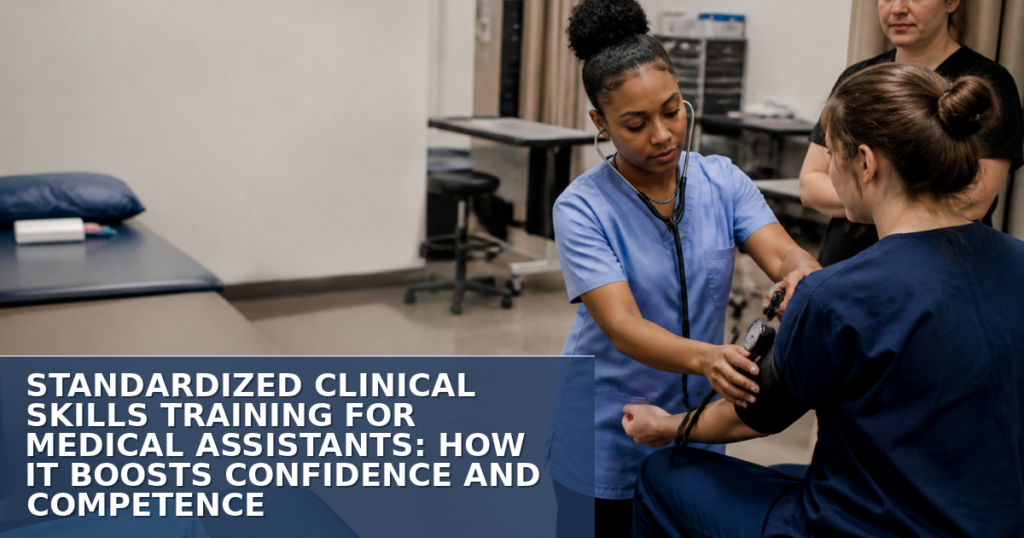
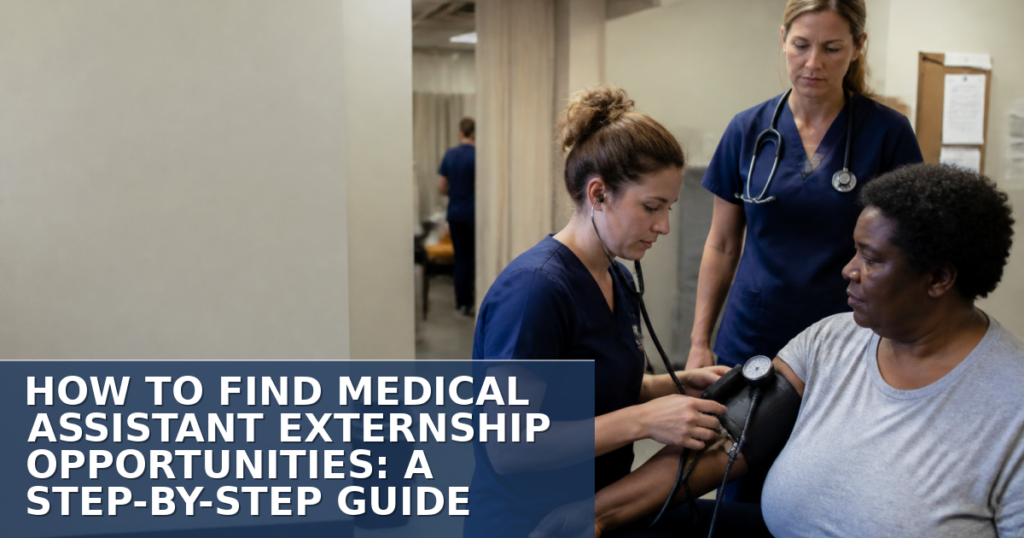
A medical assistant externship is a required clinical placement, typically 160 hours over four to six weeks, where you apply classroom skills in a real outpatient setting under a preceptor's direct supervision. Most programs assign you to a clinic, physician office, or urgent care center, and nearly all externships are unpaid. This phase marks the shift from controlled practice to live patient care, and it is completely normal for that transition to feel unsettling.
Day students usually complete around 30 hours per week, often in eight-hour shifts across five weekdays. Evening students may log closer to 16 hours weekly, stretching the placement over a longer period. Your preceptor expects active participation in core medical assistant duties: taking vitals, performing EKGs, drawing blood, collecting specimens, scheduling appointments, verifying insurance, and charting in the electronic health record. Passive observation is not the goal. You are there to do the work, make mistakes in a supervised environment, and learn from corrections in real time.
Before your first clinical day, run through this list:
Most students share the same anxieties: fear of making a visible mistake, feeling watched during every task, commuting to an unfamiliar site, and worrying that preceptor feedback means failure. These feelings are standard, not evidence that you are unprepared. Clinics expect learners to need guidance.
The externship is demanding because it is designed to bridge classroom theory and clinical reality. Prepare logistics in advance, practice core skills until they feel routine, and treat feedback as data rather than judgment. The discomfort fades as repetition builds confidence.
You don't have to be perfect; you have to be prepared.
How do you know if your stress in medical assistant training programs has crossed from "this is hard" into something that needs professional support?
Every MA student feels stretched thin at some point. The coursework is dense, the clinical skills take repetition to master, and the pace rarely lets up. A certain level of stress is built into the experience and, honestly, it can even sharpen your focus. But there is a real line between productive pressure and a mental health crisis, and knowing where that line falls could change the course of your program.
If any of the following persist for two weeks or more, treat them as a signal to reach out for help rather than push through on willpower alone:
These are recognized indicators of burnout and possible mental health conditions.1 They are not character flaws, and they do not mean you picked the wrong career.
Most schools that run allied health programs offer campus counseling services, and many provide them at no extra cost.2 Start by contacting the counseling center or student health office. If wait times are long (they can be), ask about crisis lines or community provider referrals in the meantime.
If your symptoms substantially limit your ability to keep up with coursework or clinical hours, you may also qualify for accommodations through your school's disability or accessibility office. Under the ADA and Section 504, the process is individualized: you provide documentation, and the office works with your program to determine reasonable adjustments. Common examples include extended exam time, a quiet testing space, flexible attendance policies, modified deadlines, or a temporarily reduced course load.3 For clinical rotations, schools may consider adjusted scheduling or segmented assignments, as long as the accommodation does not eliminate essential competencies the program is required to teach.
Accommodations are a legal right, not a special favor. Using them does not appear on your transcript or follow you into employment.
Reaching out to an instructor or advisor can feel awkward. Keep it simple and direct. Something like: "I have been struggling with my mental health over the past few weeks, and it is affecting my ability to keep up. I would like to talk about what support is available." You do not need to disclose a diagnosis. Most faculty in healthcare programs understand the pressure students face, and they would rather hear from you early than watch you disappear from the roster.
If your instructor is not responsive, go to your program director or the dean of students. Document the conversation in an email so there is a record.
Stress in MA school is expected. But when it stops being temporary discomfort and starts dismantling your daily life, treating it is not optional. Getting help now protects both your health and the career you are building.
The CMA credential carries a 60-month recertification cycle through the American Association of Medical Assistants. That long runway is a reminder that the overwhelm you feel in class is not the destination; it is the first stretch of a career with room to grow. Recertification can be met through medical assistant continuing education or re-examination, though exact requirements depend on current AAMA policy and your individual timeline.
Feeling flooded by anatomy terms, clinical check-offs, and externship paperwork is not evidence that you chose wrong. The path to become a medical assistant typically runs 9 months to 2 years, and that compression is intense. Passing the CMA exam and earning certification matters, but the credential is designed to be maintained, not perfected in one semester. If you are behind on one quiz or struggling with a skill, you still have time to rebuild before you sit for the exam.
There is no accredited direct medical assistant to RN bridge program that skips core nursing content. The realistic routes are a direct ADN/ASN or an incremental LPN-to-RN sequence.
The combined MA-to-LPN-to-RN route commonly runs about 3 to 5 years, so if speed matters, investigate direct ADN programs in your area before committing to incremental licenses. MA experience may strengthen an application or make early clinical rotations feel more familiar, but it never replaces required nursing coursework for RN licensure.
Costs vary widely by state and school. Recent examples include LPN-to-RN bridge tuition around $14,560 at one Massachusetts program, average ADN bridge tuition from $12,000 to $18,000, and MA-to-ADN bridge estimates from $15,000 to $35,000. Treat those as planning ranges, not fixed quotes.
Before you research nursing schools, protect your current program. Schedule a 30-minute planning block this week, same day and time if possible. Use it to map the next seven days: one exam to prep, one assignment to start, one clinical skill to review, and one non-school obligation to protect. That single weekly block is a stronger predictor of reaching CMA confidence than a late-night cramming session.