Most important takeaways…
- Salinas had 453 medical assistant job postings in August 2026.
- Salinas medical assistants earn a median wage of $50,887 annually.
- National medical assistant employment projects 12 percent growth by 2034.
Compare accredited MA programs, costs, and career outcomes for Salinas-area students
Salinas sits in a healthcare-rich corridor anchored by Salinas Valley Health, Natividad Medical Center, and a growing network of community clinics that actively hire medical assistants. Certificate programs in the area take as little as 9 to 10 months, and associate-degree paths are available within commuting distance.
Program quality and cost vary considerably, so comparing accreditation status, externship hours, and certification exam eligibility matters more than a school’s marketing claims. Read on to compare accredited medical assistant programs serving Salinas students.
With 453 medical assistant job postings in Salinas1 and 182 clinic-specific openings2 in the same city, demand for trained MAs is unmistakable. Across the region, healthcare employers are actively searching for capable medical assistants who can step into busy practices and make an immediate impact.
Several large systems anchor the medical assistant job market here. Salinas Valley Health (formerly Salinas Valley Memorial Healthcare System), Natividad Medical Center, and Montage Health's Community Hospital of the Monterey Peninsula (CHOMP) and its affiliated clinics all maintain a steady hiring volume. Federally Qualified Health Centers like Clinica de Salud del Valle de Salinas are also key employers, along with Kaiser Permanente's Salinas Medical Offices, Planned Parenthood Mar Monte, and County of Monterey clinics. Even the California Correctional Health Care Services posts openings at Salinas Valley State Prison. These organizations span hospital networks, outpatient clinics, public-sector facilities, and community health settings, giving new graduates a range of environments to consider.
The Salinas Valley's agricultural workforce and large underserved population create a special need for medical assistants who speak Spanish. Many patients rely on interpreters or switch to Spanish during appointments, so fluency is more than a nice-to-have , it is a hiring advantage. Several employers, including the County of Monterey and Clinica de Salud, actively recruit bilingual MAs. If you're comfortable taking histories and explaining care instructions in Spanish, two key medical assistant duties, you'll stand out to the region's biggest healthcare providers.
Salinas sits at a crossroads. A short drive takes you to Monterey, Seaside, Marina, Hollister, or Watsonville, each with its own set of employers and MA openings. For example, Montage Health's growing network stretches across Monterey County, and job boards like Indeed medical assistant jobs in Monterey regularly list roles in Seaside and Monterey. This geography means you aren't limited to positions inside city limits , many graduates commute to neighboring towns for the right clinic or schedule.
California does not require medical assistants to hold a state license, but it does limit the clinical tasks an uncertified assistant can perform under physician supervision. Earning a national certification (such as through the AAMA, AMT, or NHA) removes many of those restrictions and makes you a stronger candidate. Most Salinas-area employers expect medical assistant certification california or a plan to obtain it soon after hire. While the law does not mandate it, certification is the practical key to unlocking more job options and higher starting pay in this competitive market.
Medical assistants in the Salinas-Monterey metro area earn a median annual wage of $50,887, topping California's statewide median of $49,660. The salary range stretches from about $39,000 at the 10th percentile to over $62,000 at the 90th, giving a clear view of local earning potential.

What factors should you actually weigh when deciding between medical assistant programs near Salinas? With several schools offering certificates and associate degrees within commuting distance, a structured comparison framework helps you move past marketing language and focus on what directly affects your career.
Create a simple spreadsheet or chart with these columns for each program you are considering:
No single program comparison tool offers all this data side by side, so building your own gives you a clear view that cuts through promotional material.
Accreditation isn’t just a quality seal, medical assistant program accreditation determines which certification exams you can take after graduation. Programs accredited by CAAHEP or ABHES make you eligible for the CMA (AAMA) or RMA (AMT) exams, the credentials most recognized by hospitals and larger medical groups. Programs accredited only by COE or approved solely through state agencies may limit you to credentials like the CCMA (NHA) or CMAC, which some employers accept but others do not.
Before enrolling in any private or vocational school in California, verify that the institution holds approval from the Bureau for Private Postsecondary Education (BPPE). This state consumer-protection requirement is separate from programmatic accreditation. A school can be ABHES-accredited nationally but still need BPPE approval to operate legally in California. Check the BPPE website or ask the admissions office directly for proof of current approval.
Many students in Salinas balance training with jobs in agriculture, hospitality, or retail that follow unpredictable schedules. Evening classes, weekend labs, and hybrid formats, the kind offered in part-time medical assistant programs, can make the difference between finishing a program and dropping out. When you contact admissions, ask specifically about class times, whether attendance can shift between sessions, and how clinical rotations are scheduled. Some programs offer externships at clinics with extended hours, which can accommodate students who work daytime shifts.
A few extra hours comparing these details upfront can save months of frustration later.
Community college certificate versus medical assistant trade schools: this is the single biggest cost decision facing Salinas-area MA students, and the price gap is enormous.
Among accredited programs within commuting distance of Salinas, tuition and fees vary by more than tenfold. Public community colleges like Monterey Peninsula College, Cabrillo College in Aptos, and Hartnell-adjacent options publish in-state tuition in the $1,200 to $1,500 range per year, with total certificate program costs often landing under $5,000 once books, uniforms, and lab fees are added. Monterey Peninsula College's medical assisting pathway, for example, advertises roughly $5,000 in total program tuition for its one-year certificate.
Private career colleges sit at the opposite end. Gurnick Academy of Medical Arts and Carrington College's San Jose campus both list tuition and fees above $32,000 for their medical assisting programs. The tradeoff is speed and structure: accelerated medical assistant program schedules, built-in exam prep, and job placement support. Whether that premium is worth it depends on your timeline, learning style, and how quickly you need to be earning.
When you see an average net price figure for a school, treat it as a starting point, not a quote. It reflects the institution-wide average cost after grants and scholarships for first-time, full-time undergraduates, blending every program from nursing to welding. Your actual out-of-pocket cost for an MA certificate could be higher or lower. Ask each school's financial aid office for a program-specific breakdown that includes tuition, fees, books, supplies, uniforms, and any certification exam costs.
A 10-month certificate gets you into a paying MA role roughly a year sooner than a two-year associate degree. Even if per-credit tuition is similar, that extra year of earnings (often $40,000 or more at entry level in the Monterey Bay area) is real money the associate path defers. The associate degree pays off if you plan to bridge into nursing or a bachelor's program later, but for students who want to work as an MA and stop there, the certificate is usually the better financial call.
Accreditation is a formal review process that confirms a school or program meets established quality standards. For medical assistant students, the type of accreditation your program holds directly determines which national certification exams you can sit for after graduation, so this is one of the most consequential details to check before you enroll.
Salinas-area students will encounter four names when researching program legitimacy:
The practical takeaway: if earning a nationally recognized credential matters to you (and in most hiring situations it will), you want a program accredited by CAAHEP or ABHES, not just an institution approved by COE or BPPE.
Central Coast College in Salinas is a private postsecondary institution with current institutional accreditation through ACCET2 and active BPPE approval to operate.1 However, its medical assistant program does not currently appear in the CAAHEP directory of accredited programs or those holding a Letter of Review. The school previously held ABHES accreditation for medical assisting but voluntarily withdrew that status years ago. Students considering Central Coast College should ask the admissions office directly which certification exams their graduates are eligible for.
For other local options, including CET (Center for Employment Training), Hartnell College, CALRegional, and Salinas Adult School, programmatic accreditation status through CAAHEP or ABHES could not be independently confirmed from current directory listings. That does not automatically mean these programs lack approval, but it does mean you should verify before committing tuition dollars. Hartnell College, as a public community college, operates under regional accreditation, which is a different framework than the programmatic accreditation tied to certification eligibility.
Do not rely solely on what a school's website or recruiter tells you. Cross-check using these free tools:
Spending ten minutes on these searches can save you from enrolling in a program that limits your career options. If a program is not listed in the CAAHEP or ABHES directories and cannot provide documentation explaining why, treat that as a serious red flag.
How many clinical hours do I actually need before I can apply for medical assistant jobs in Salinas?
Externship requirements are one of the biggest information gaps for prospective students. Many program listings mention "clinical training" but never pin down the required hours, whether the school helps you find a site, or where you might end up working. For someone juggling work, family, and school, a vague externship promise just isn't enough to plan a life around. Here’s what we can confirm for Salinas-area programs based on publicly available curriculum details.
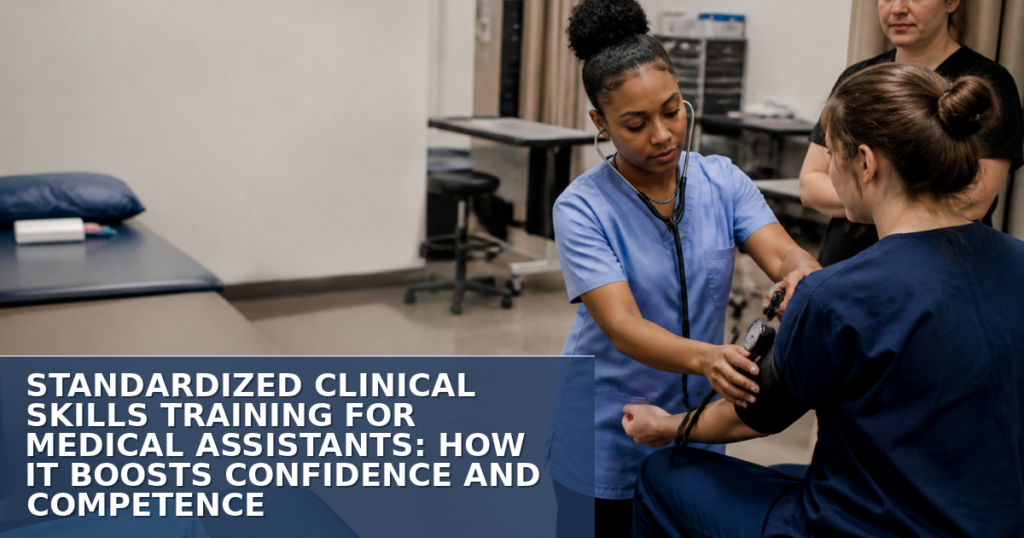
Once a student is ready for the clinical portion, the most common placements are at local hospitals, community clinics, and private practices that already train medical assistants. In Monterey County, facilities like Salinas Valley Health clinics and Natividad Medical Center frequently precept allied health students, along with a network of community health centers and independent physician offices throughout the Salinas area. Students should expect to work in real patient-care settings under the supervision of experienced medical assistants, nurses, or physicians, practicing medical assistant clinical skills like vital signs, phlebotomy, EKGs, and charting.
This is a make-or-break detail that many applicants overlook. Some programs, like CALRegional, handle placement for you and guarantee a site as part of the enrollment. Others may offer assistance but ultimately expect you to find and coordinate your own externship. Central Coast College has not publicly specified whether it places students or acts as a guide, so you’ll want to ask this outright: “Do you arrange the externship site, or do I have to find my own?” If self-placement is required, factor in the extra time and effort of cold-calling clinics and navigating onboarding requirements like drug screens, immunizations, and background checks. This distinction can completely change your timeline and stress level.
Many Salinas students balance jobs and school; verifying scheduling options now helps avoid conflicts that force you to pause training.
Local employers like Salinas Valley Health may list CMA or RMA preferences; checking job postings today reveals which credential opens the most doors.
Widening your search to nearby cities expands program choices, but factor in Highway 1 traffic and fuel costs before deciding.
Which medical assistant certification will Salinas employers actually look for? The answer depends partly on where you train and partly on which specific credentials local hospitals and clinics prefer. Starting with a clear picture of the four main credential options and how program accreditation affects your eligibility can help you avoid a costly detour.
Your choice may be narrowed simply by the accreditation of the program you attend. If your school holds CAAHEP or ABHES accreditation, you can pursue any of the four credentials. But if your program is accredited only by an agency like COE, the CMA (AAMA) is off the table, so your certification ambitions could be limited from the start. This makes accreditation a gating factor for the most recognized credential, and it is worth confirming before you enroll.
You can work as a medical assistant without certification under California law, but employer practice in Salinas and across the region tells a different story. Large healthcare networks, including those in Monterey County, overwhelmingly prefer or require certification. And even when not required, holding a credential typically sets your application apart. More importantly, California regulations do define a clinical specialty scope for medical assistants that involves injections, skin tests, and venipuncture; demonstrating training in these areas is part of the certification process with the state certifying board, so certification becomes a practical necessity for many roles.5
While detailed program-level earnings data is not yet published for the schools serving Salinas, the broader pattern is consistent: certified medical assistants earn more. Many local employers offer a pay differential of $1 to $3 an hour for MAs who hold an active national credential. Over a year, that can add up to several thousand dollars, a meaningful ROI for a certification exam fee that rarely exceeds a few hundred dollars. The decision is rarely about whether certification is valuable; it is about picking the credential that best supports your career advancement and long-term goals.
Becoming a medical assistant in Salinas follows a clear path from training to certification. Here is a timeline that maps each phase so you can plan your entry into the field.

Below are the top medical assistant programs serving Salinas students, ranked by IPEDS completion data, accreditation status, and program fit. These schools, all within 50 miles of the Salinas metro area, offer a range of certificates and associate degrees tailored to various career goals and learning preferences.
Saratoga, CA · ~$3,000/yr (est.)
Best for: Salinas Valley commuters pursuing an associate
West Valley College in Saratoga offers a Medical Assistant Associate in Science degree, located about an hour's drive north of Salinas via Highway 101. As a designated Hispanic-Serving Institution (HSI), the college provides an inclusive environment with a 42-unit major core and a total of 64 units for the degree. The campus-based program combines front- and back-office training with internship placement, preparing graduates for roles in clinics and physician offices. The school's overall graduation rate is 51%.
San Jose, CA · $30,000 – $35,000/yr
Best for: Career changers needing fast hybrid certification
Gurnick Academy of Medical Arts has a San Jose campus roughly 50 miles from Salinas, offering an 8-month Medical Assistant Certificate program. The ABHES-accredited program blends classroom theory with hands-on lab practice, with hybrid course delivery for flexibility. Students prepare for the CCMA and CET national exams, with on-campus testing available through an NHA-approved site. The school's overall graduation rate is 64%.
San Jose, CA · $36,000/yr
Best for: Students wanting externship-heavy clinical training
Carrington College's San Jose campus offers both a 36-week Certificate of Achievement and an Associate of Science in Medical Assisting, with 750 contact hours and a 180-hour externship. The campus is about 50 miles from Salinas, and graduates can sit for the NHA Clinical Medical Assistant (CCMA) exam. With a graduation rate of 60%, the program includes career development seminars and an online option for the associate degree completion. The school serves a high Pell-eligible population (84% of students receive aid).
Aptos, CA · $15,000 – $20,000/yr
Cabrillo College in Aptos, about 30 miles from Salinas via Highway 1, offers a Medical Assisting Certificate of Achievement and an Associate of Science degree. The certificate can be completed in two semesters plus a 180-hour externship, with new cohorts starting each fall. As an HSI with a graduation rate of 38%, Cabrillo provides experienced faculty and real-world training, with applications accepted year-round. The Santa Cruz area's average annual salary for medical assistants is reported at $49,718.
Monterey, CA · $10,000 – $15,000/yr
Monterey Peninsula College is just 15 miles from Salinas, offering a Medical Assisting Certificate of Achievement that can be completed in as little as one year. With a total tuition of around $5,000, the program includes a 160-hour externship at a local medical facility, preparing graduates for the RMA exam. Classes are available at Marina and Monterey campuses, with an online medical terminology course for flexibility. The school is an HSI with a graduation rate of 40%, and the region projects 20% job growth for medical assistants.
San Jose, CA · ~$17,000/yr (est.)
San Jose City College offers a Medical Assisting: Clinical Certificate of Achievement, with coursework in physical examination, medication administration, phlebotomy, and lab procedures. The campus is about 50 miles from Salinas, and the program includes a clinical externship in a physician's office, clinic, or hospital. This HSI school has a 34% overall graduation rate, and the 31-32 unit program prepares students for CMA or RMA certification.
San Jose, CA · ~$12,000/yr (est.)
Evergreen Valley College in San Jose offers a 22-unit Medical Assistant - Front Office certificate, focusing on administrative skills like medical terminology, coding, billing, and communications. The program includes a hands-on internship and is designed for rapid entry into roles such as medical biller or patient specialist. With a graduation rate of 41%, this campus-based program provides direct interaction with instructors and is around 50 miles from Salinas.
Did you know the medical assisting field is projected to grow 12 percent between 2024 and 2034, according to the Bureau of Labor Statistics? That's faster than most occupations nationally, translating to roughly 112,300 job openings each year on average, a promising sign for MA students training in and around Salinas.
The details that separate a good program from a frustrating one rarely show up on a school's homepage, so you need to dig before you commit.
Many working adults in the Salinas area need evening or weekend cohorts to fit classes around jobs, childcare, or long commutes through the valley. Published catalogs and websites sometimes lag behind real scheduling changes, so call the admissions office directly and ask which cohort formats are running right now. Ask specifically whether labs and lecture meet on different days, since split schedules can catch students off guard.
If earning the CMA (AAMA) or RMA (AMT) credential is part of your plan, the program itself, not just the college or school, must hold accreditation through CAAHEP or ABHES. Visit CAAHEP.org or ABHES.org and search by program name to confirm current status before you enroll. A school can be regionally accredited and still offer an MA program that does not qualify you for national certification exams.
Ask the school for a list of clinics and medical offices where recent cohorts completed their externship hours. Then visit or call a few of those sites. Find out whether externs were offered positions after finishing, and whether the clinical environment felt supportive. An externship at a busy community health center in Salinas or a specialty practice in Monterey can open doors that classroom training alone cannot.
Tuition is only one piece of the bill. Factor in:
These extras commonly add $500 to $1,500 on top of listed tuition. Ask each school for an itemized cost-of-attendance sheet so you can compare programs side by side with realistic numbers.
Prospective students often have key questions about training, costs, and career outcomes. Here are answers to the most common ones we hear from readers in Salinas and the surrounding area.
Medical assistant salaries in Salinas generally range between $23 and $29 per hour, with annual pay around $42,000 to $49,000. Indeed reports $28.71 per hour for certified medical assistants.1 Meanwhile, the County of Monterey lists $5,155 per month.2 Statewide, the median hourly wage is about $23.3
The medical assistant program length for certificate programs is typically 9 to 12 months, while associate degree programs usually require about two years of full-time study. Some accelerated or part-time options may be available, so completion time can vary based on the program structure and your schedule.
We did not find any Salinas-based programs with CAAHEP or ABHES accreditation in our research, but accredited schools are available within 50 miles. We recommend visiting the CAAHEP or ABHES websites for an up-to-date directory, or contacting local schools directly to verify their accreditation status before applying.
Training costs vary by school and program type. Certificate programs at community colleges or technical schools may range from roughly $3,000 to $10,000 or more, while associate degree programs can be higher. Many schools offer financial aid, payment plans, and scholarships, so it is best to contact the admissions office for a precise estimate.
Typical admission requirements include a high school diploma or GED. Some programs may also ask for a minimum GPA, current immunizations, a background check, and basic U.S. proficiency. For example, a local employer requires completion of a Medical Board of California compliant program, BLS certification, and often six months of experience or a successful externship.4 Always confirm with your chosen school.