Most important takeaways…
- Prisma Health Richland and Lexington Medical Center are actively hiring medical assistants.
- Both certificate and associate programs prepare you for CMA or RMA exams.
- Medical assisting is projected to grow 14% through 2032.
Compare accredited programs, tuition, and completion times at Columbia-area campuses so you can start your career with confidence.
Columbia's health systems keep adding outpatient clinics, and medical assistant hiring in the Midlands now moves faster than most other entry-level clinical roles. South Carolina does not require medical assistants to hold a state license, but major Columbia employers such as Prisma Health and Lexington Medical Center commonly list CMA or RMA certification as a hiring condition.
That gap between legal minimum and employer expectation is what a training decision hinges on. Cost, clinical hours, and credential preparation differ enough across local programs to change your first job options.
Columbia's hospital systems are hiring medical assistants faster than most other roles in outpatient care, and that demand shapes everything about where you should train and what credential you should pursue. Prisma Health Richland, Lexington Medical Center, Providence Health, and MUSC Health Columbia anchor the metro's clinical footprint, and each has expanded primary care and specialty clinic networks in recent years. Every new clinic location means more front-desk and back-office MA positions, so the growth of these systems translates directly into steady openings for graduates of medical assistant training programs south carolina.
South Carolina does not require state licensure for medical assistants, which sometimes surprises people new to the field.1 There's no state board exam and no license number to maintain. But don't mistake that for a free pass to skip certification.
Nearly every employer in the Columbia metro asks for or strongly prefers a Certified Medical Assistant (CMA) credential through the AAMA or a Registered Medical Assistant (RMA) credential through AMT. Job postings across physician offices and specialty clinics routinely list one of these as a qualification. Some practices will still hire medical assistants without certification for entry-level or limited-duty roles, but the trend is moving away from that. A 2024 update to South Carolina's medical assisting law clarified the definition of a certified medical assistant and set a compliance deadline of July 15, 2026 for workers already on the job to complete an approved training pathway and earn certification.2 If you're planning a career here, treat CMA or RMA credentialing as the real baseline, not a nice-to-have.
The same 2024 law spells out what physicians, PAs, and APRNs can and cannot delegate to a CMA. Tasks like administering controlled substances, IV medications, or chemo drugs, injecting neurotoxins or fillers, using lasers or tissue-destructive instruments, suturing, taking radiographs, and interpreting symptoms or test results remain off-limits.3 Routine injections, EKGs, and phlebotomy under supervision are standard parts of medical assistant duties and responsibilities.
Healthcare hiring extends well beyond downtown Columbia into Lexington, Irmo, West Columbia, Sumter, and Orangeburg, all within reasonable commuting range and worth watching if you're weighing where to work after graduation.
Both paths can qualify you to sit for the CMA or RMA exam, so entry-level employers often weigh certification more than degree level. A certificate is usually faster and lower cost; an associate degree adds general education credits that can transfer if you later pursue nursing or another allied health path.

This table compares published tuition and average net price after grant aid for medical assistant programs in the Columbia area. Net price is an institution-level average, not a guaranteed individual quote, and it can be lower after state, military, or school-specific aid. Midlands Technical College is the public option among the listed programs, while Fortis College, South University, and Southeastern College are private institutions with higher sticker prices in most cases.
| School | Type | In-State Tuition | Out-of-State Tuition | Average Net Price After Aid | Pell Grant Share |
|---|---|---|---|---|---|
| Midlands Technical College | Public | $5,100 | $14,700 | $4,647 | 80% |
| Fortis College-Columbia | Private | $14,777 | $14,777 | $20,404 | 91% |
| University of South Carolina | Public | $12,688 | $35,972 | $22,811 | 43% |
| South University-Columbia | Private | $18,145 | $18,145 | $27,693 | 78% |
| Southeastern College-Columbia | Private | $25,080 | $25,080 | $31,941 | 88% |
If your paycheck is non-negotiable, look for evening, weekend, or hybrid cohorts, because class times that collide with a full-time job often lead to dropping out.
If so, the associate degree may be worth the extra time because its general education credits often transfer toward a later degree. A shorter certificate may not build that bridge.
Ask where current students complete clinical rotations before you compare tuition alone. An externship far from home can quietly add hours of weekly driving.
What do I actually need to apply to each medical assistant program in Columbia, SC?
The short answer is that requirements vary by school, and several programs emphasize placement testing, interviews, and clinical clearance more than a single GPA cutoff. Here is a school-by-school look based on current public materials.
Midlands Technical College sets a baseline of a high school diploma or equivalent. Applicants must complete the college's placement test and meet the Health Sciences Department admissions requirements, which typically include a program interview. The program also requires current First Aid and CPR certifications at entry, plus an acceptable criminal background check and drug screening result. Science credits from high school or college are recommended but not explicitly listed as mandatory prerequisites. The available materials do not state a specific minimum GPA or a single application deadline. That suggests a department review process rather than a simple open door, but you should confirm whether the Medical Assisting program admits on a rolling basis or in fixed cohorts before applying.
Fortis College Columbia lists a clear baseline: high school graduation or a recognized equivalent, age 17 or older at program start, an applicant information form, and an interview. The 2027-2028 catalog names a SLE (Scholastic Level Exam) minimum entrance requirement of 11 for Medical Assisting. The available materials do not list a GPA floor, prerequisite courses, background check, immunization record, or application deadline. In practical terms, this looks like a more accessible entry path if you meet the age, education, and SLE threshold, but do not assume there are no additional requirements; contact the Columbia campus directly.
South University Columbia is more explicit about clinical clearance. Before the first MA Practicum clinical placement, students must complete a background check and drug screen at their own expense, with results submitted at least three weeks before the intended start date. A positive background check can prevent you from starting AHS2098. The program also requires evidence of Hepatitis B immunization initiation or completion and a current flu shot, uploaded through the compliance agency at least three weeks prior. Healthcare provider level CPR/First Aid certification is required. GPA, prerequisite coursework, entrance exam, and application deadline are not stated in the reviewed materials.
For ECPI University's Columbia campus and Southeastern Health & Wellness Institute, current admissions requirements could not be verified from the available public materials. ECPI's page does not include enough detail to confirm GPA, testing, or deadline expectations, and Southeastern Health & Wellness only identifies the program page. If you are considering either school, call the admissions office and ask for a written list of requirements, including any background check, immunization, or entrance exam policies.
Across these five programs, published application deadlines were not readily available in the materials reviewed. Some allied health programs in the region use rolling admissions or cohort-based starts, but that should not be assumed here. Similarly, Fortis does not advertise a GPA floor, while Midlands and South University describe multiple steps beyond a transcript review. Treat Midlands and South University as more structured or selective, and Fortis as potentially more open, but verify current admission cycles with each school before you commit to a deadline or prerequisite plan.
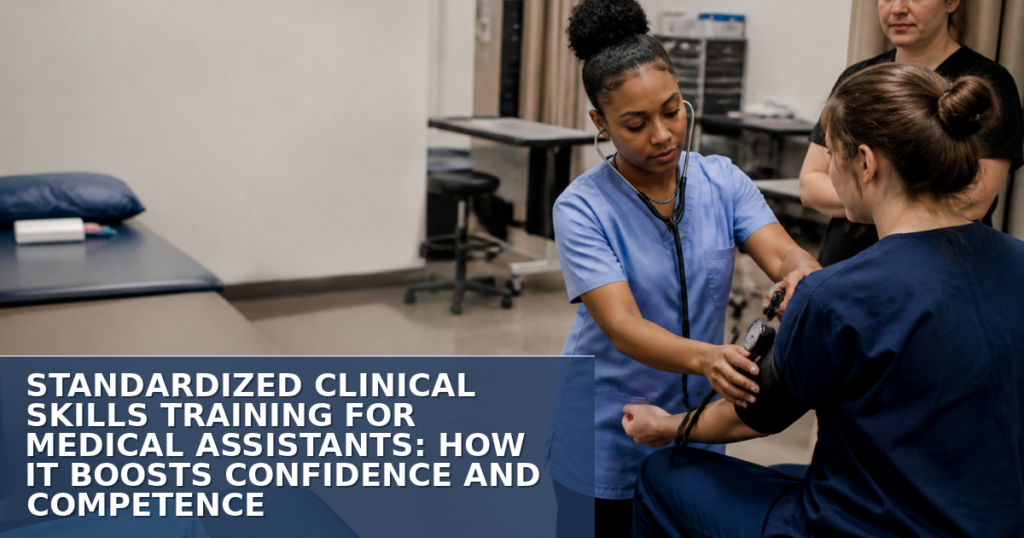
A medical assistant externship is the supervised, hands-on portion of medical assistant training. It is where you practice rooming patients, taking vital signs, giving injections within your scope, and using an electronic health record in a real clinical setting before you graduate and sit for certification.
Columbia-area program materials show real variation, but public details are incomplete. Use these figures as a starting point and confirm totals directly with each school.
Other Columbia-area programs may publish different totals. Always ask for the current externship hour requirement and how those hours are scheduled around your coursework.
Published information for Midlands Technical College and Technical College of the Lowcountry does not explicitly state whether the college assigns students to a site or students must find their own preceptor.12 That distinction can affect your timeline. Ask each program: Do you arrange my placement? Do you provide an approved site list? What happens if my site cancels or stops accepting students?
Midlands Technical College does reference clinical sites or slots around Columbia, Florence, Sumter, Charleston, Greenville, and Spartanburg.3 That list suggests clinical placement may not be limited to the Columbia area, so ask how far you could travel.
Externship completion is typically a graduation requirement, and graduation from a medical assistant training program is the usual education pathway to qualify for the CMA or RMA exam. In practice, that means you cannot move to certification until your clinical hours are finished and your program signs off. Treat the externship as a required step, not an optional internship.
In most Columbia-area medical assisting job posts, the real decision is not whether to become certified, but which credential to carry: the Certified Medical Assistant (CMA) through the American Association of Medical Assistants (AAMA) or the registered medical assistant certification (RMA) through American Medical Technologists (AMT). Both tell employers you have met a national standard, but the eligibility path, exam style, and renewal rhythm are not identical.
In general, CAAHEP-accredited medical assisting programs are the clearest path to CMA (AAMA) eligibility, while ABHES-accredited programs often align with RMA (AMT) eligibility. Some ABHES-accredited graduates can also qualify for the CMA, so confirm the pathway with your program. The CMA exam covers clinical, administrative, and general competencies, and AAMA certification is recertified every 60 months through continuing education or re-examination under CMA recertification requirements. RMA uses a comparable competency-based exam through AMT and has annual certification maintenance paired with continuing education. In the Columbia market, many outpatient and clinic employers list the credentials together, treating CMA or RMA as equally acceptable for entry-level roles.
For most entry-level medical assistant openings in the Columbia area, either credential satisfies the listed requirement. The bigger differentiator is choosing a program whose clinical training and exam preparation align with the exam you intend to take. If you already have a target employer, ask whether that office prefers CMA, RMA, or accepts both before you register for a certification exam.
If you are juggling a job, family responsibilities, or both, finding a medical assistant program that fits your schedule is just as important as picking the right curriculum. Here is what to expect from Columbia-area programs when it comes to flexibility.
Midlands Technical College offers its Medical Assisting Academic Certificate using a mix of delivery formats, including classroom, online, and hybrid coursework. That blend can help you complete some didactic content from home while attending hands-on lab sessions on campus. The program is listed as full time, so expect a weekday commitment that may be difficult to pair with a standard 9-to-5 job.
Other area schools, including Fortis College, ECPI University, South University, and Southeastern Health & Wellness Institute, each serve Columbia students with medical assistant training, but detailed scheduling information for their current cohorts is not always published online. Before ruling any school out, call the admissions office directly and ask about evening, weekend, or hybrid options. Availability can shift from one enrollment cycle to the next.
Among the confirmed details available, Midlands Technical College does not currently list a part-time track for its Medical Assisting certificate. If part-time pacing is a must for you, make that one of your first questions when contacting each school. Some private institutions in the metro area have historically offered evening or compressed schedules that let working adults spread coursework over a longer window, but these details should be verified with current admissions representatives.
No accredited medical assistant program can be completed entirely online. Every CAAHEP- or ABHES-accredited curriculum requires in-person lab practice and a supervised clinical externship. Even programs that deliver lectures or theory modules virtually will still need you on campus, or at a clinical site, for a significant portion of the program. Plan for at least some daytime availability during your externship rotation, which typically runs during regular clinic hours.
A few practical steps can simplify the search:
The bottom line: flexibility exists, but it varies. Contact each school's admissions team with your specific availability so you get accurate, up-to-date answers rather than outdated catalog descriptions.
Below are the top medical assistant programs serving Columbia students, ranked by IPEDS completion data, accreditation status, and program fit. Most campuses sit within a short drive of downtown Columbia or across the river in West Columbia, making them practical options for commuters from Lexington, Cayce, and Irmo. Each card highlights the credential level, format, net price, and graduation rate where available.
West Columbia, SC · $5,000 – $15,000/yr
Best for: Cost-conscious students seeking local campus training
Midlands Technical College offers a CAAHEP-accredited medical assisting certificate at its Airport Campus, just across the Congaree River from downtown Columbia. The program blends clerical and clinical training, including phlebotomy, EKGs, and insurance claims, and includes a required externship in physician offices, clinics, or emergency centers. Graduates are prepared for the CMA (AAMA) or RMA (AMT) national exams, and the curriculum articulates into other health programs. It is one of the lowest-cost routes locally, with a strong reputation among Columbia-area employers.
Columbia, SC · $25,000 – $30,000/yr
Best for: Hands-on learners wanting in-person associate
South University-Columbia offers a CAAHEP-accredited Associate of Science in Medical Assisting at its Columbia campus. The competency-based program includes a 160-hour supervised practicum and requires a national certification exam to complete. Public data shows a strong 88.89% certification exam pass rate, and financial aid options, student success grants, and military benefits are available. The associate route adds general education depth for students considering future healthcare advancement.
Columbia, SC · $32,000/yr
Best for: Working students needing hybrid flexibility
Southeastern College-Columbia offers an ABHES-accredited medical assisting associate program with blended online and on-campus coursework for Columbia-area students. The 60-credit curriculum includes clinical skills such as EKG, injections, and venipuncture, plus medical billing and electronic health records. Students complete a clinical externship, with daytime externship scheduling required even when coursework is online in the evening. The Columbia campus sits along Columbia Mall Boulevard, convenient for commuters.
Columbia, SC · $20,000 – $25,000/yr
Fortis College-Columbia is a private career college near downtown Columbia, with the campus described as an easy drive from I-126 and I-26. The medical assisting associate track blends hands-on labs with classroom learning and covers both clinical and administrative skills, from patient care to office management. The school advertises financial aid for those who qualify and career services support. However, current CAAHEP or ABHES accreditation for this program was not confirmed in public records, so prospective students should verify programmatic accreditation directly with the school before enrolling.
Columbia, SC · $23,000/yr
The University of South Carolina offers a 100% online certificate through its Union campus that prepares students for the Certified Medical Administrative Assistant (CMAA) exam plus medical billing and coding credentials like CPC, CCA, or CBCS. This start-anytime program is designed for administrative medical office roles rather than hands-on clinical assisting, and includes certification exam vouchers. It is a flexible option for Columbia-area learners who want to work in front-office healthcare support without a traditional clinical externship.
Did you know medical assisting is projected to grow 14% from 2022 to 2032, according to the Bureau of Labor Statistics, much faster than the average occupation? That translates to roughly 119,000 new positions nationally, good news for Columbia students weighing whether this career path is worth the investment.
Certificate or associate degree. Fastest route into patient care or a longer runway toward supervisory roles. The right Columbia-area medical assistant training program usually comes down to which of those outcomes you need next, and how much flexibility you have while you train.
Before you compare tuition or tour a campus, confirm program accreditation directly at CAAHEP.org or ABHES.org. This is not a paperwork detail. CMA exam eligibility requires completion of a CAAHEP- or ABHES-accredited medical assisting program. A college may have regional accreditation but not program-level accreditation, so ask specifically about the medical assistant program's status and verify it yourself.
Use these five factors to compare schools side by side:
If you can, visit a campus or attend an information session. Ask for recent medical assistant program job placement rates, not just overall college outcomes. Ask which clinical sites currently accept students in the Columbia area. Some rotations may be in Lexington, West Columbia, Northeast Columbia, or nearby counties, and your commute during externship matters as much as your commute to class.
There is no single best program for every student. If your priority is speed, look for a compact certificate path. If your priority is cost, compare community college options and the net price after aid. If your priority is a strong clinical network, choose a program with well-established hospital and outpatient partners. If your priority is medical assistant advancement opportunities, an associate degree with transferable general education credits may give you more options later. Let your work schedule, your household responsibilities, and your next career step set the tiebreaker.
These are the questions prospective medical assistants ask most often about training in the Columbia area. We pulled together the key details on program length, cost, accreditation, and certification so you can compare your options.
Most diploma programs take 8 to 11 months full time, while associate degrees run about 15 to 23 months depending on full- or part-time status.23 Some clinical medical assistant certificates can be completed in as little as 11 to 20 weeks.76 Plan for 8 to 20 months as a typical accredited medical assistant program length.1
No. South Carolina does not require a degree or state license to work as a medical assistant.4 However, most employers prefer candidates with formal training and a national credential such as CMA or RMA, which can improve job prospects and pay. A certificate or diploma is a common entry path for meeting medical assistant certification requirements.
Both are national credentials earned through medical assistant certification exams that validate medical assisting skills. The Certified Medical Assistant (CMA) is issued by the American Association of Medical Assistants (AAMA), while the Registered Medical Assistant (RMA) is issued by American Medical Technologists (AMT).4 Employers in Columbia generally accept either, though the CMA is more widely recognized in some settings.
ECPI University's Columbia campus is ABHES-accredited.2 The sources reviewed do not confirm CAAHEP accreditation for any Columbia-area program, and accreditation status for Fortis, South University, Southeastern College, and South Carolina School of Phlebotomy is not clearly stated. Check with each school directly before enrolling.
Online certificates are often the most affordable, with US Career Institute around $3,295 for a 4-month program.5 Among in-person options, Southeastern Health and Wellness Institute lists $9,150 total.6 ECPI's published per-segment cost is roughly $7,848, but verify total program costs with the school.2