Why New Medical Assistant Programs Are Opening Everywhere – and How to Get In
Discover the surge in MA training programs, what it means for your career, and how to find a new or accelerated path in 2026.
By Jennifer GubblerReviewed by Editorial StaffUpdated July 24, 202618 min read
Most important takeaways…
Employer demand for medical assistants fuels record program launches in 2026.
Youngstown State University offers a new hybrid ophthalmic assistant program this fall.
Direct employer pipelines give graduates from new programs a hiring edge.
Medical assistant training programs are opening at a pace rarely seen before. Youngstown State University’s hybrid Ophthalmic Clinical Assistant Certificate, launching this fall, is just one example of how schools are scrambling to meet workforce demand. Healthcare employers need skilled clinical support staff, and new funding is making program launches feasible for colleges.
For anyone considering the field, the combination of accessible formats and strong job prospects hasn’t lined up this well in years. The real challenge now is sorting through the surge of options to find a program with solid accreditation and a clear path to certification.
Why Medical Assistant Programs Are Expanding Now
The raw demand for medical assistants is creating a wave of new program openings, and it’s showing no signs of slowing down.
A Perfect Storm of Need
Healthcare employers are desperate. Burnout, early retirements, and pandemic-driven turnover have thinned clinical support ranks, and the gap between open MA positions and qualified applicants keeps widening. Medical assistants are the flexible backbone of outpatient care, rooming patients, handling administrative work, and increasingly performing point-of-care procedures. As clinics shift from fee-for-service to value-based models, they need more MAs to manage population health, coordinate care, and keep providers from drowning in paperwork.
This isn’t just a blip. The population is aging rapidly, and more older adults means more primary care visits, specialty referrals, and routine monitoring, all of which rely on medical assistants, particularly in a medical assistant primary care role. Meanwhile, healthcare systems are pushing more procedures into outpatient settings, where MAs are essential. The result? A staffing crisis so deep that it’s sparked a race to open and expand training programs.
Funding Fuels the Fire
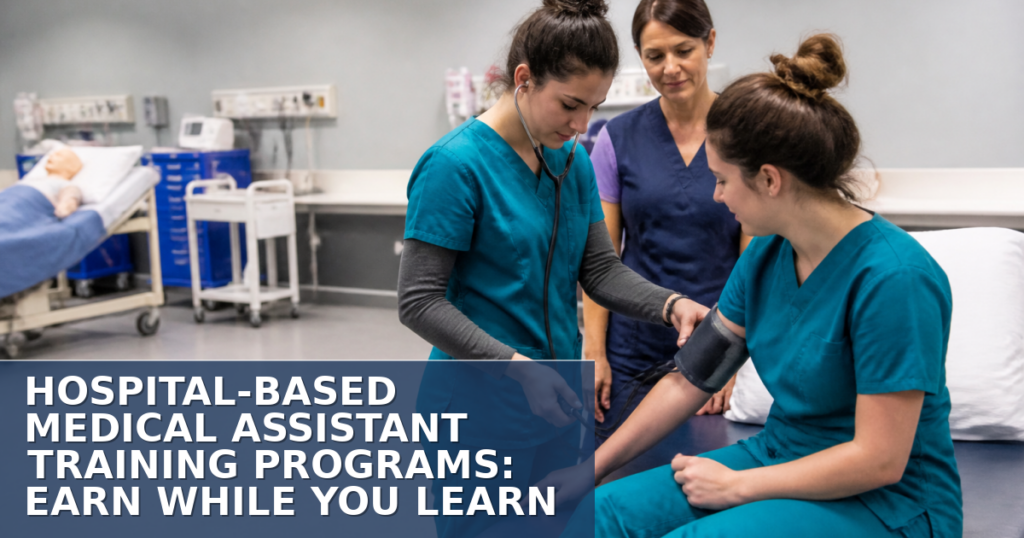
New programs don’t materialize on hope alone. Federal and state workforce development grants, including medical assistant grants, have become a major catalyst. In the past two years, diverse funding streams, from the American Rescue Plan’s healthcare workforce allocations to specific state-level initiatives, have given community colleges and medical assistant trade schools the dollars to launch accelerated MA tracks. For example, Youngstown State University is rolling out a hybrid Ophthalmic Clinical Assistant certificate this fall, backed by institutional investments and a clear signal from local eye care employers that they need trained staff.2 Industry partnerships are also stepping in: hospitals and large clinics sometimes cover tuition or pay apprentices while they learn, as CHAS Health did with its 2025 apprenticeship program.1
A Wave of New Options Across the Country
Tracking every new MA program in the U.S. is tough because many are local and unpublicized beyond their region, but the trend is unmistakable. Community colleges reported a surge of new or expanded allied health programs in 2025 and 2026, and private vocational schools are adding hybrid and online tracks to reach working adults. Hot spots include the Midwest and Southeast, where hospital expansion and population growth collide with a thin bench of trained support staff. Even niche programs like ophthalmic or podiatric assisting are popping up, offering specialized pathways that didn’t exist a few years ago.
Importantly, this expansion isn’t creating an oversupply. The Bureau of Labor Statistics’ medical assistant job outlook projects employment to grow much faster than average well into the next decade. Every new graduate entering the field is being absorbed almost immediately. New programs are a necessary response to a chronic shortage, not a fleeting bubble.
Spotlight: New and Expanded MA Programs Worth Watching
General medical assisting programs provide a broad foundation for patient care, but a growing number of colleges are launching highly focused tracks that fast-track you into niche specialties. These new offerings are often built with working adults and career changers in mind, blending flexible formats with direct pipelines to certification.
Youngstown State University's Ophthalmic Clinical Assistant Certificate
Youngstown State University is bringing a new hybrid option to Ohio in fall 2026. Through its Bitonte College of Health and Human Services, YSU will offer a three-semester Ophthalmic Clinical Assistant Certificate. The program combines online asynchronous coursework with in-person labs and clinical training, giving you the freedom to study on your own schedule while still getting hands-on practice. In-person sessions will be held at the Campbell Health and Community Development Center in Lowellville, a brand-new facility built specifically for health education. Program director Latrice Jones-Bey explains the design as a flexible pathway into a growing healthcare field. You'll study eye anatomy, ocular diseases, diagnostic imaging, and patient care procedures, learning everything from vision testing to eye imaging and patient workups. The cohort model starts a new class each fall, so you move through the program alongside the same group. Graduates who are 18 or older are eligible to sit for the Ophthalmic Assistant certification exam, a respected credential for entry into ophthalmology offices.
Baltimore City Community College's Growing Workforce Programs
Baltimore City Community College has been expanding its healthcare training to meet local demand. Its Multi-Skilled Medical Technician program is a non-credit, intensive one-year evening program designed for adults who need to balance work and family. The program runs two overlapping cohorts (starting in January and May) at the South Pavilion on Liberty Heights Avenue.1 While the program is not currently accredited by CAAHEP, BCCC's overall enrollment has been climbing; spring 2025 numbers showed a 14% jump from the prior year, signaling strong interest in allied health careers.2 Program-specific certification pass rates and job placement statistics have not been published, but the college's focus on evening, accelerated formats makes it a viable entry point for many Baltimore-area students.
Other Notable Models Across the Country
Beyond these two, keep an eye out for employer-sponsored medical assistant training programs that cover tuition in exchange for a work commitment, tuition-free initiatives funded by state grants, and specialty certificates in areas like podiatry or dermatology assisting. Some community colleges also offer dual-enrollment options, letting high school students get a head start. These new programs are rarely one-size-fits-all; you can find accelerated medical assistant programs, hybrid online/in-person setups, and partnerships with local clinics that practically guarantee a job interview upon graduation. The common thread is a response to real workforce shortages, meaning the training is directly aligned with what employers need right now.
Medical assistant program enrollment is surging, yet demand for certified MAs still far outpaces supply. Earning your credential today puts you in a strategic spot for job security and career growth.
How to Find Recently Launched Medical Assistant Programs
Tracking down a just-announced medical assistant program takes a little more effort than scrolling a familiar college catalog, but a few focused search habits can put you ahead of the crowd.
Use Targeted Online Searches
Keywords worth trying: Pair phrases like "new medical assistant program [your state]", "MA certificate expansion 2026", or "medical assistant training launch" with your city or county.
News alerts: Search local news sites and press release archives: community colleges and hospitals often announce new tracks before they appear on aggregator sites.
Tap Professional Associations and Workforce Boards
The American Association of Medical Assistants (AAMA) and American Medical Technologists (AMT) maintain directories of accredited programs, including newly approved ones. Your state's workforce development board or department of education may also publish grant-funded expansions or apprenticeship registrations that signal brand-new training options.
Monitor Community College and Technical School Announcements
These institutions are frequently the first to pilot innovative programs. Bookmark the "news" or "academics" pages of nearby public two-year schools, and check them monthly. Look for press releases about healthcare workforce initiatives or new certificate approvals.
Set Up Automated Alerts
Google Alerts is a simple, free tool. Create alerts for "medical assistant program opening", "MA training launch", or "medical assistant certificate new" plus your region. You will receive email digests whenever those terms appear in newly indexed web content.
Check Hospital and Health System Career Pages
Many large health systems now run internal medical assistant training programs or partner with local colleges to fill open roles. Scan the "careers" or "professional development" sections of hospital websites: some list upcoming cohorts alongside job postings. Employer-sponsored pathways often guarantee a job interview upon completion.
Once you have a shortlist of recently launched programs, you can weigh accreditation, format flexibility (like online medical assistant programs), and cost: topics we will compare in the next section.
Accreditation and Certification: What to Check in a New Program
Accreditation and certification work together to make sure your training meets national standards and qualifies you for credentials employers trust. When you're looking at a brand-new medical assistant program, checking these boxes isn't optional: it's the best way to protect your time and money.
Start with State Regulations
Medical assistant duties vary from state to state, and some states require specific training or supervision for certain tasks. Before you enroll, visit your state's health department or medical board website to review scope-of-practice rules and medical assistant state license requirements. This step helps you confirm that the new program's curriculum aligns with what you'll legally be allowed to do after graduation.
Verify Program Accreditation
Once you know your state's expectations, check the program's medical assistant program accreditation status. The Commission on Accreditation of Allied Health Education Programs (CAAHEP) and the Accrediting Bureau of Health Education Schools (ABHES) are the two bodies that matter most for medical assisting. A program accredited by either one ensures graduates can sit for the Certified Medical Assistant (CMA) exam through the AAMA. If the program is too new to have full accreditation, ask whether it has applied for approval and what the timeline looks like. You can also cross-reference the school's website with the accreditor's directory.
Use National Resources
For a broader picture, the Bureau of Labor Statistics (BLS.gov) offers a general overview of certification requirements and how they vary by state. While it won't give you the fine print, it's a good starting point to understand what credentials employers seek in your area. Additionally, professional organizations like the American Association of Medical Assistants (AAMA) and the National Healthcareer Association (NHA) often publish state-specific updates. Don't hesitate to call or email them directly; their staff can help you navigate any recent regulatory changes that might affect a new program.
Comparing Program Formats: Online, Hybrid, and In-Person
Self-paced online coursework fits busy schedules, while structured in-person classes keep you on track. Hybrid models try to merge convenience with hands-on practice. As new medical assistant programs launch, including specialized hybrid ophthalmic medical assistant programs, the variety of formats can feel overwhelming. Here's how to compare them on the factors that matter most for your career.
Where to Find Reliable Data
The Bureau of Labor Statistics (BLS) is the go-to for median salaries and job growth projections; it confirms medical assisting remains a fast-expanding field. But the BLS does not break down tuition costs or certification pass rates by program format. For that level of detail, you need to dig into best medical assistant schools and industry-certifying bodies.
Cost Shopping Across Formats
Tuition varies widely. A self-paced online certificate through University of Utah's continuing education costs $3,2001, while a hybrid program like Educatly's lists at $7,6812. Pueblo Community College's in-person certificate costs about $5,700 ($175 per credit)3, and an associate degree at Northeast Texas Community College runs roughly $7,5654. Newly launched programs often have introductory pricing but minimal outcome data. To compare fairly:
- Request a cost sheet: Get a detailed breakdown including per-credit rates, lab fees, and total program expense from at least three schools per format (online, hybrid, in-person).
- Ask about hidden costs: Hybrid or in-person tracks may involve parking, travel, or uniform expenses that online-only formats avoid.
Checking Certification and Placement Rates
Pass rates for the CMA (AAMA) or RMA (AMT) exams are not state secrets. The AAMA and AMT publish program-level pass rates on their websites; verify any program's numbers there, especially for new or untested formats. For job placement, every program should provide an annual placement report upon request. Cross-check those numbers with state licensing boards or recent alumni; ask for alumni contact information. Accelerated programs (3-6 months) market speed, but intensity does not guarantee better placement; a slightly longer, well-connected program might give you a stronger foot in the door.
Job Prospects: What Program Expansion Means for Your Career
A common fear is that more graduates from expanding programs will flood the job market, but the data tells a different story.
Strong employer connections create direct pipelines
When programs grow, they often deepen ties with local healthcare systems. Many now build in guaranteed interviews, tuition reimbursement, or direct hiring pipelines. For example, Great Bay Community College’s medical assistant program partners with Core Physicians, Wentworth-Douglass Physician Corp, and Lamprey Health Care, contributing to a 90% job placement rate. UnitedHealth’s apprenticeship offers structured medical assistant on the job training, paying students $16 per hour during training and $17.50 upon completion, a clear incentive that leads to a job offer.
National demand far outpaces supply
The Bureau of Labor Statistics projects a 15% increase in medical assistant employment from 2024 to 2034, much faster than the average for all occupations, and the CNA vs CMA job outlook confirms that CMA demand remains especially strong. In some states the need is even sharper: Arizona expects 51% growth over a decade. Program expansion is a response to this unmet demand, not a sign of oversupply. High vacancy rates persist in many regions, meaning new graduates enter a market hungry for their skills.
New programs align with today’s healthcare needs
Recently launched programs often design their curriculum with direct employer input, ensuring students learn the latest electronic health record systems, team-based care models, and in-demand clinical procedures. This fresh focus can make graduates more competitive, and pathways like how to get a medical assistant job with no experience are more accessible than ever. Rather than worrying about too many peers, prospective students should see program expansion as a signal of strong, long-term career opportunities.
Tips for Choosing Between New Vs. Established Programs
How do you weigh a brand-new medical assistant program against one with a long track record? It's a question more prospective students are asking as new MA programs open across the country , from the Ophthalmic Clinical Assistant certificate at Youngstown State University to expanded offerings at community colleges like Baltimore City Community College. Both new and seasoned programs can lead to certification and a job, but the path looks different depending on which you choose.
What to Compare: Placement Rates, Faculty, and Clinical Sites
Start with the nuts and bolts. Look at job placement rates if they're available, though new programs may only have projected numbers. Ask about faculty experience , are instructors seasoned medical assistants or ophthalmologists? Check which clinical sites the program partners with. Established programs often have long-standing relationships with hospitals and clinics, but new ones may secure fresh partnerships with employers who helped design the curriculum.
Externship Hours and Clinical Partner Quality
Review the externship or practicum hours required. A solid program, new or old, should offer at least 160 hours of hands-on clinical experience reflecting the duties of a clinical medical assistant. If the program is new, ask how they are building their clinical partner network. Are students guaranteed placements, or will you need to find your own site? For specialized tracks like YSU’s ophthalmic assistant certificate, confirm the clinical sites provide experience that matches your career goals.
The Upside of New Programs: Small Classes and Modern Tools
Don’t dismiss a program just because it’s new. Founding cohorts often enjoy smaller class sizes, direct access to faculty, and the latest equipment , YSU’s hybrid model uses modern diagnostic imaging tools from day one. New programs may also be more nimble in responding to local employer needs, shaping their curriculum around real-time job market gaps.
Accreditation: The Great Equalizer
Whether a program is brand new or decades old, the same accreditation standards apply. Verify that the program holds institutional accreditation and, ideally, programmatic accreditation from CAAHEP or ABHES if it’s a general MA program. For specialized certificates, check for industry-specific recognition , the YSU program prepares students for the Certified Ophthalmic Assistant exam, which is accredited by IJCAHPO. Meeting medical assisting accreditation requirements means the curriculum, faculty, and resources have passed a baseline review, so you can trust that even a new program has passed muster.
Ask the Program Coordinator Directly
Reach out to the program director , their response can tell you a lot. Ask about first-time certification exam pass rates (if available), employer feedback from clinical sites, and whether they’ve adjusted the program based on student outcomes. At YSU, program director Latrice Jones-Bey hosts virtual info sessions to walk applicants through what you’ll learn and how it translates to the job market. A coordinator who is transparent and accessible often signals a supportive learning environment, no matter the program’s age.
Answering Your Top Questions About MA Program Expansion
With more programs launching in 2026, it's natural to wonder how this trend affects your career. Here are straightforward answers to common questions about medical assistant training, job prospects, and earning potential.
Are medical assistants being phased out?
No. The Bureau of Labor Statistics projects 12% job growth for medical assistants from 2024 to 2034, with about 112,300 openings per year.1 This growth is driven by an aging population and expanding healthcare services, making MAs an in-demand role for the foreseeable future.
How to make $100,000 as a medical assistant?
Reaching that salary is rare, as the median annual wage is $44,200.1 It could happen with extensive overtime, a supervisory position, or by specializing in high-demand areas like ophthalmology. Many MAs ultimately boost their earnings by transitioning to registered nursing through ma to rn bridge programs or healthcare management roles.
Why are some medical assistant programs longer than others?
Program length varies by depth and credential. Accelerated programs (4-9 months) focus on core clinical and administrative skills for quick entry. Comprehensive programs (12-24 months) include more in-depth coursework, externship hours, and may lead to an associate degree, which can expand career options.
Will all these new programs flood the job market?
It's unlikely. Demand for medical assistants continues to outpace supply in many regions, with robust projected openings. New programs often open where employers are actively seeking trained MAs, so graduates typically find opportunities without oversaturation, especially in growing specialties.
What is the fastest way to become a certified medical assistant?
An accelerated certificate program (4-9 months) is the quickest path. Many schools offer hybrid models combining online theory with in-person labs and clinicals. After completing an accredited program, you can sit for a national certification exam like the cma exam to become certified.
In July 2026, Youngstown State University held virtual info sessions for its new hybrid Ophthalmic Clinical Assistant Certificate1, a program that attracted interest from high school students, working adults, and career changers. That launch mirrors the wave of accelerated and flexible medical assistant programs opening nationwide. Employer demand remains high, and earning your credential now positions you for steady, meaningful work. Use the search tools shared here to find a local program and take the next step: attend an info session or request enrollment details today.