Dermatology Clinic Vs. Operating Room: Work Environment Face-Off
As healthcare delivery models shift toward outpatient efficiency, the contrast between a dermatology clinic and a hospital operating room, captured in the medical assistant hospital vs clinic comparison, has never been starker for medical assistants. These two settings feel like entirely different worlds, and the right fit depends as much on your personality as your career goals.
The Physical Setting
Dermatology clinics are typically bright, office-park suites with windows, natural light, and a predictable layout of exam rooms and procedure areas. The atmosphere is calm and controlled, with decor that often feels more like a spa than a medical facility. By comparison, an operating room suite is sterile, windowless, and temperature-regulated for surgical equipment, not human comfort. Constant background noise from monitors, suction devices, and overhead pagers creates a high-stimulus environment that some people find energizing and others find draining, a reminder to ask: is being a medical assistant hard and stressful?
Pace and Flow of the Day
A typical medical assistant workday in dermatology moves through 10- to 15-minute appointment slots, juggling rooming, scribing, assisting with biopsies or excisions, and turning over rooms between patients. Multitasking is constant, but downtime between no-shows or cancellations provides brief moments to catch up. In the OR, the day revolves around a block schedule of surgeries: long stretches of intense, uninterrupted focus during procedures, followed by rapid bursts of activity during turnovers , cleaning instruments, resetting the room, and prepping the next patient. The rhythm cycles between stillness and action rather than constant multitasking.
Team Structure and Hierarchy
In a dermatology practice, you often work one-on-one with a physician or advanced practice provider. You may be the only MA in the room, which means a high degree of autonomy and a close working relationship with your provider. The OR team is larger and more hierarchical: you'll function alongside a surgeon, anesthesiologist, RN circulator, and surgical technologist. A perioperative assistant's scope is narrower and more supervised, but you're also part of a tightly coordinated unit where everyone has a specific, interdependent role.
Dress Code and Infection Control
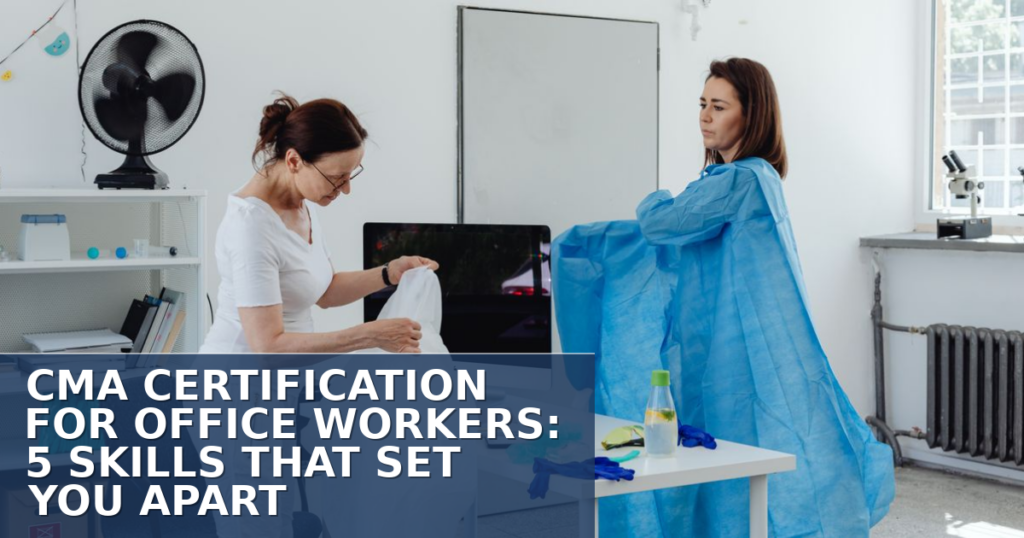
Dermatology MAs typically wear scrubs, adding gloves, masks, and occasionally gowns during procedures. The focus is on standard precautions and minor sterile fields. In the OR, full surgical attire is mandatory: sterile gown, gloves, mask, eye protection, and hair covering, with strict sterile technique governing everything you touch and how you move. Infection control is aggressive and protocol-driven, with zero tolerance for breaks in sterility.
Patient Interaction
Dermatology patients often return every few months for chronic conditions like acne, eczema, or skin cancer follow-ups. You get to build longer-term relationships and recognize familiar faces. Perioperative patient contact is brief and episodic: you meet patients during pre-op prep and maybe see them in post-op, but the focus is on the procedure itself, not ongoing care. The conversations are more task-oriented than relational.