A Day in the Life of a Primary Care MA in 2026
In a typical medical assistant workday, the modern primary care MA does more meaningful clinical work before lunch than many allied health professionals do all day. If you have been picturing a job that starts and ends with taking vitals, the reality at a well-run clinic using a teamlet model (one provider paired with two MAs) will surprise you.
Before the First Patient Walks In
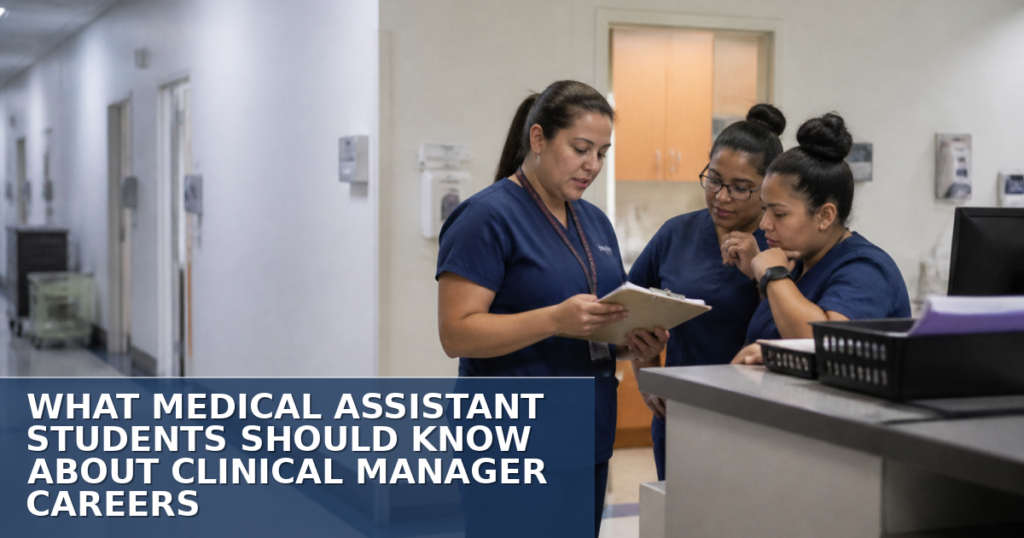
Your shift starts at 7:00 AM with a team huddle. You, your MA partner, and your provider gather around a screen to review the day's schedule. You pull up care gap reports and flag patients who are overdue for an A1c check, a mammogram referral, or a depression screening. Pre-visit planning like this saves time later and catches problems that would otherwise slip through the cracks. You also divvy up tasks: one MA handles rooming and point-of-care testing, the other manages the provider's in-basket messages and follow-up calls from yesterday's visits.
The Morning Flow
By 8:15 your first patient is in the exam room. You run through the basics (vitals, medication reconciliation, allergy updates), but you also set the visit agenda by asking, "What are the top two things you want to talk about with the doctor today?" This simple question keeps the visit focused and cuts down on those rushed, over-time appointments.
At 9:00 you room a patient with type 2 diabetes. You run a point-of-care A1c test while chatting about how her week has gone. Her result is 8.4, still above goal. Using motivational interviewing techniques you learned in your medical assistant classes, you ask open-ended questions instead of lecturing: "What has been the hardest part about sticking with your meal plan?" She opens up about late-night snacking after stressful shifts at work. Together, you brainstorm one small, realistic change she can try this week. She leaves feeling heard rather than judged. Three months later, her A1c drops to 7.6, and she credits that conversation as a turning point.
During the provider's exam, you scribe the encounter note in real time, freeing the doctor to maintain eye contact and focus on the patient.
The Afternoon Grind (and the Good Kind)
After lunch, your duties shift. You give two flu vaccines, complete a prior authorization form, and then spend 45 minutes on population health outreach, calling patients who missed their annual wellness visits. Between calls, you manage the in-basket, routing lab results and prescription refill requests so the provider can sign off quickly.
By 5:00 PM, you have blended traditional tasks with responsibilities that would have been unthinkable for MAs a decade ago:
- Vitals and injections: Still the backbone of the role.
- Health coaching: Using a scripted motivational interviewing framework to support behavior change.
- Panel management: Identifying care gaps and closing them proactively.
- Scribing: Documenting visits so providers can focus on patients.
- In-basket triage: Handling messages, refills, and result routing.
Why This Matters
A day like this is not aspirational. Clinics operating under the teamlet model already structure their workflows this way, and they report higher patient satisfaction and lower provider burnout. For you as an MA, it means every shift has variety, intellectual challenge, and moments where you can see the direct impact of your work on someone's health. That diabetic patient who finally felt heard? That is the kind of difference you make when your role expands beyond the basics, and it's why many find that a medical assistant is a good career.