Most important takeaways…
- AAMA requires at least 160 supervised clinical hours for CMA eligibility.
- Marshall Medical and EDCOE trained seven CMA-ready graduates in 2026.
- An externship is the interview you don't know you're having.
Learn how MA externships work, where to find one, and how to turn clinical hours into a job offer.
Most medical assistant certification routes require a supervised clinical placement, and the AAMA's CMA credential sets a minimum of 160 hours in an ambulatory or outpatient setting. That requirement makes the externship more than a formality: it is the point where your medical assistant training either holds up under a real patient schedule or falls apart.
Clinics use the same weeks to watch whether you arrive on time, handle conflict with patients, and stay efficient under pressure. Treat the placement as an unpaid, extended job interview, because many employers do. Students who treat it as a box to check often finish their hours without a reference, while students who treat it as an audition leave with a job offer.
AAMA's CMA credential requires at least 160 hours of supervised clinical experience in an ambulatory or outpatient setting. That number is a practical definition of the medical assistant externship: a site-based, hands-on placement tied to an accredited medical assistant training program, not a brief job-shadowing visit. You are present in a clinic or practice and participating in real patient care under preceptor supervision.
An externship places you in a working ambulatory site during or just after classroom training. You may room patients, measure vital signs, perform EKGs, assist with phlebotomy, document in the EHR, and practice front-office tasks such as scheduling and insurance verification. The goal is to apply skills with real patients, real workflows, and real accountability.
Certificate programs commonly require 80 to 160 externship hours.4 Diploma programs often run 160 to 200 hours, and associate degree pathways aligned with AAMA or AMT also tend to 160 to 200 hours.1 The difference is in didactic coursework, not necessarily externship length. A 200-hour placement at a technical college or a 160-hour placement at a community college can both satisfy the same certifying body if the setting and supervision match.7
Certifying bodies typically specify total hours, not weekly scheduling. Your school decides whether you complete them full time, like 3 weeks at 40 hours per week, or part time, like 6 weeks at 20 hours per week.4 Focus on accumulating the total verified patient contact hours, because that is what credentialing applications and employers review. Some employers and schools look for documented competency sign-offs in each area, not just a log of hours. Hands-on patient hours also give you a reference point for skills like phlebotomy draws and EKG lead placement, which are hard to master from a textbook.
In 2026, most medical assistant externships are unpaid or carry only a small stipend, but paid positions do appear in certain settings. Compare the two experiences before you accept a placement.
| Paid medical assistant externships | Unpaid medical assistant externships |
|---|---|
| Less common overall in 2026 postings; many programs are training-focused without formal pay. | The most common arrangement; often labeled non-paid volunteer or training experience. |
| Large health systems, hospitals, urgent care clinics, and some private or specialty practices. Examples include Penn Medicine at $14 per hour and Trinity Health IHA at $20 per hour. | Hospital, clinic, private practice, and community training sites. Several postings explicitly describe these as non-paid volunteer roles. |
| Hourly pay ranges widely from $14 to $33.08 depending on employer and region. Community pathway programs may offer a $150 weekly training stipend and $450 weekly externship stipend. | No hourly wage or salary. Some sites offer a small stipend, but many provide no financial compensation. Federal FLSA rules allow unpaid status only when the extern is the primary beneficiary. |
| Often structured as a hiring pipeline. Penn Medicine's paid externship leads to an interview for a full-time medical assistant role starting at $21.50 per hour with benefits. | Less formal and not guaranteed. Employment may follow, but the placement is usually framed as hands-on training rather than a direct job offer. |
| Paid externs may still earn academic credit, but compensation means the employer likely treats them as an employee with tax withholding. | Unpaid externships must be tied to a formal education program, resemble classroom training, and follow an academic calendar to pass the FLSA primary beneficiary test. |
Externship requirements vary more than many students expect. The table below shows representative state expectations for clinical hours and how placements can be approved or assigned in 2026. Always confirm current rules with your program because site availability and state credentialing standards can shift.
| State | Typical Required Hours | Key Regulation or Site Approval Note |
|---|---|---|
| California | 160 hours | Externship placement is selected by the student and cleared by the school; the site must give final approval, and the school says students must meet the minimum California requirements for the clinical portion of the course. |
| Texas | 36 hours per week for five weeks | The externship is scheduled at the end of the program and hours may vary depending on the externship site's schedule; the school assigns externship sites through its coordinator. |
| Florida | 200 hours | Externship placement is guaranteed, and the school tries to match each student with one of their top three site choices based on availability and location preferences. |
| New York | 180 hours | The student must locate and secure a proctor and externship site in New York; the clinical coordinator can assist, but the placement is not automatically assigned. |
| Ohio | 40 to 120 hours | Clinical site requests are handled through affiliation agreement and clinical site location records, indicating site approval or affiliation paperwork is required by the hosting institution. |
| Washington | 160 hours | State credentialing allows a minimum of 720 clock hours of training in medical assisting skills, including an externship of no less than 160 hours. |
| Arizona | 100 to 200 hours | Most externships require between 100 and 200 clinical hours, with 160 hours a common benchmark; no state-specific externship rule was identified in the gathered source. |
| Pennsylvania | 240 hours | Externship site availability varies by cohort and is subject to change; applicants must be located near an approved externship partner. |
Finding a medical assistant externship means matching your required clinical hours to a real clinic schedule you can actually sustain. Most programs expect 100 to 200 hours, often 160, so timing matters as much as location.
Before you send a single cold email, ask your program coordinator for the affiliated site list. Many schools place students directly with partner clinics, which can remove the guesswork around whether a site meets training requirements. Ask whether the school assigns sites or expects you to confirm a spot, and request contact details for the coordinator who handles externship agreements.
Make a short list of clinic types that align with your career goals. Primary care and family practice sites build general rooming and vitals skills, while urgent care and specialty clinics can expose you to faster workflows and a narrower set of procedures. A simple outreach message can be: "Hi, I'm a medical assisting student completing my externship hours. Is your clinic accepting externs this term, and who should I send my school paperwork to?" Follow up once by phone if needed.
Evening and weekend placements do exist, especially at urgent care or extended-hour clinics, but they are not guaranteed. Some programs set weekly minimums around 30 hours for day cohorts and 16 hours for evening cohorts, while other sites may require you to follow their regular hours, including Saturdays or evenings.
Confirm total required hours, weekly minimum, evening or weekend eligibility, and whether the site can adjust the block if your job schedule changes. Working students often need to treat the externship as the priority for a few weeks, so get that flexibility in writing before you start.
What do you actually need to finish before your first medical assistant externship day? Most surprises happen before you walk in: missing immunization records, incomplete HIPAA training, or a background check that clears too late. Treat the week before as your final compliance sprint.
OSHA requirements apply to the clinical site as the employer1, but as an extern you are generally treated like a worker for safety rules. Bloodborne pathogen training is required before you start a role with exposure risk and often again each year.2 HIPAA training must happen before you see protected health information.5 Expect to sign a confidentiality agreement4, and treat HIPAA confidentiality rules as if they apply to you just as they do to staff.
Liability or malpractice coverage is not standardized nationally. In some placements the school provides it, in others the clinical site covers externs, and in some states students must purchase a policy. The details are generally written into the affiliation agreement between your program and the site, so ask your coordinator before your first day instead of assuming.
Review the specialty, the electronic health record system if it is named in your orientation materials, and the patient population. Even 30 minutes of research helps you ask better questions and feel less lost.
An externship is not just a box to check before certification; it is an extended audition where the clinic decides whether you are someone they would want to hire. The tradeoff is real: you may be unpaid and juggling a tight medical assistant externship schedule, but the impression you leave can shorten your job search later.
Prepare like you would for medical assistant interview questions: show up 10 to 15 minutes early, dressed in the exact scrubs or business attire the site requires. Bring a small notebook, your immunization or compliance documents if requested, and a pen. If you are unsure about parking, badge, or where to check in, call ahead. Treating logistics as your responsibility, not the preceptor's, signals that you can handle patient flow.
Offer to stock rooms, call patients, scan documents, or chaperone during exams only if it is allowed within the medical assistant scope of practice in that state. When a task is new, say, "I have not done this before. Can you walk me through it once?" Never perform a skill outside your training, even if a staff member suggests it. Asking first protects patient safety and shows clinical judgment.
Use closed-loop communication: repeat back instructions, report when a task is complete, and ask what is next. Front-office staff often have influence with the hiring manager, so treat scheduling, billing, and reception colleagues with the same respect as nurses and physicians. Avoid venting, cell phone use, or side conversations in patient areas.
At least once a week, ask your preceptor: "What is one thing I can improve before my next shift?" Write it down and act on it. Identify one mentor, often a lead MA or nurse, and stay in touch after the externship ends. A specific, positive reference from that person can carry more weight than a generic certificate.
An externship isn't just a graduation requirement, it's the interview you don't know you're having.
Most medical assistant externships use some combination of a performance rubric, a skills log, a time sheet, and preceptor sign-offs. Do not expect one universal form. A 180-hour rotation may include a midpoint check around 90 hours and a final evaluation at the end, while shorter or longer rotations often adjust those checkpoints.
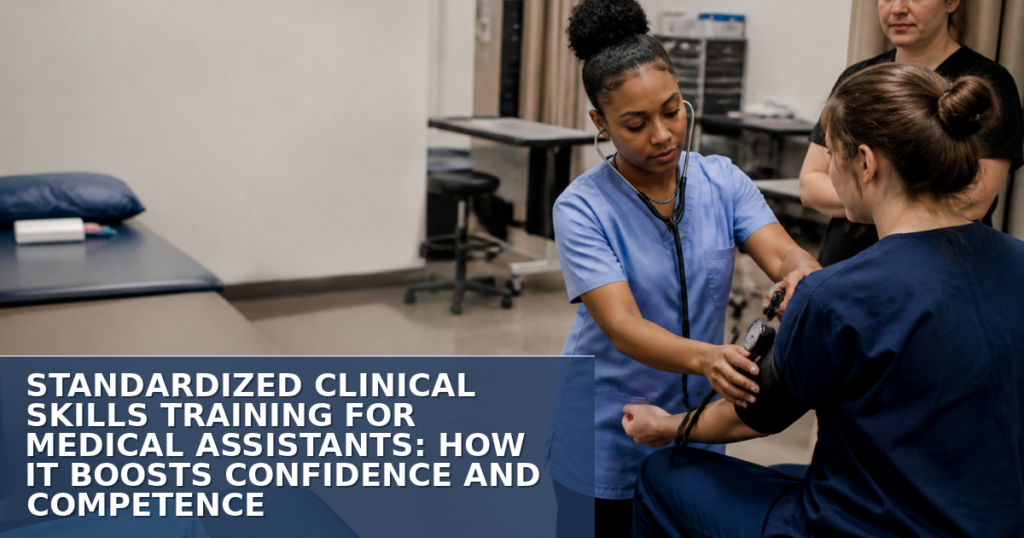
Competency categories tend to cluster into four areas: clinical, administrative, professionalism, and safety.2 Clinical items often cover vital signs, injections, phlebotomy or specimen collection, ECG, and patient rooming or assisting, reflecting standardized clinical skills training for medical assistants. Administrative items may include scheduling, chart preparation, EHR documentation, and basic insurance or coding tasks under supervision. Professionalism covers promptness, appearance, cooperation, initiative, and patient and staff interactions. Safety includes PPE, hand hygiene, and incident awareness.
Grading scales vary. Some sites use a 4-point scale from excellent to needs improvement.3 Others use pass/fail or a 5-point scale that adds exceeds expectations.4 Some checklists allow N/A for tasks a site cannot offer and may require at least half of the items, so do not panic if you do not hit everything.5
Keep your own running record even when the site keeps one. Use the school's standardized time sheet if provided, and subtract lunch from total hours. Many programs exclude lunch from externship hours.4 Record dates, start and end times, total hours, and a short note for each shift, including any weekly performance evaluations by site supervisors.7 For skills, update a personal log weekly with the task, approximate number of attempts, and preceptor initials if possible. That record becomes useful if there is a discrepancy later.
Ask your preceptor to sign off on new skills while the experience is fresh. Do not wait until the last day to collect a stack of signatures. Final forms are often completed throughout the rotation and submitted by the last day.8
Report medical assistant job problems or safety concerns immediately to your on-site preceptor, then follow your school's reporting path. If you are unsure who that is, ask your instructor or externship coordinator during the first week. Describe what happened, who was involved, when and where it occurred, and any immediate action taken.6 If you feel uncomfortable reporting something at the site, use your school channel directly. You are a learner, and asking for help with an unsafe practice is part of professional judgment.
Medical assistants earn a median of $45,690 per year, with the middle 50% earning between $38,470 and $49,180.
Turning your medical assistant externship into a job is less about luck and more about treating the rotation as medical assistant interview preparation. Many employers view externships exactly this way: they get to see how you handle patients, charting, phone calls, and team dynamics before they ever post a job.
Industry surveys put the share of medical assistant externs who receive a job offer from their training site at roughly 30 to 40 percent, and about 40 percent of clinical sites report hiring their own externs.1 These figures are directional, since the survey methodology and sample are not public, but they match a common hiring pattern: managers prefer candidates they have already observed. Some clinics say upwards of 65 percent of their new hires came from their externship pool, though that measures a share of hires, not an offer rate for every extern.2
Do not wait until the final day to talk about a job. About a week before the rotation closes, ask your supervisor or office manager whether openings exist or are expected. If they are not hiring, ask for names of nearby practices that are. Send a thank-you note within 24 to 48 hours, then stay in touch every few weeks without becoming a pest.4
Behaviors hiring managers repeatedly cite as offer triggers are concrete:3 - Punctuality and reliability: Arrive early, do not leave early, and do not call out without a clear reason. - Professional presence: Keep your phone away unless you are on break, avoid gossip, and respect patient privacy. - Initiative and teachability: Ask to observe procedures, offer to restock rooms, and accept feedback without getting defensive. - Communication and empathy: Use plain language with patients, confirm instructions, and show warmth without overstepping your role.
Request a letter of recommendation from your supervisor and one instructor while your performance is fresh. Be specific: ask them to mention the skills they saw, not just your attendance. If the site posts an internal position, apply through the same portal with a polished medical assistant resume and tell your supervisor you applied. Program-level placement data can reach 95 percent within two months for graduates with externship experience1, but that reflects placement anywhere, not a guaranteed job at the same site. The direct path is simple: be the person the clinic already trusts.
One medical assistant graduates with supervised clinical hours, a site supervisor who can vouch for their work, and a clear sense of what a full patient schedule requires. Another leaves the same program with classroom labs and a certificate alone. The first candidate is not guaranteed a job, but the second often has more convincing to do. That gap shapes the medical assistant career outlook more than most students expect.
The most recent U.S. Bureau of Labor Statistics data, covering 2025, estimates that medical assistants held approximately 817,870 jobs nationally. The median annual wage was $45,690. The 25th to 75th percentile range was roughly $38,470 to $49,180, which means half of medical assistants earned within that band. The mean annual wage was slightly higher at $46,120. Treat these figures as a recent benchmark, not a current-year promise. Local demand, setting, and your own clinical experience will adjust the number.
Employment totals do not show who gets called first. In many entry-level pools, entry-level medical assistant applicants with a completed externship have the edge because they arrive with verified hands-on experience. A supervisor can describe how they roomed patients, used the EHR, or handled front-desk duties. Regional employers may also hire from hospital partnerships they already trust, which shortens the path from program to paycheck.
Most new medical assistants start closer to the lower end of the range, especially in smaller practices or rural areas. Higher starting pay often follows additional credentials, a strong externship evaluation, or a local staffing shortage. Compare the national numbers with recent job postings in your area, and treat your first role as a base for building experience rather than a final salary ceiling.