How to Become a Medical Assistant in Nebraska
The quickest route into an Omaha medical assisting career is a certificate; the longer route is an associate degree. But Nebraska adds a crucial twist: the state does not license medical assistants, so your real decision is less about meeting a state registry and more about becoming the nationally certified candidate local employers expect.
Nebraska has no state license, but delegation still sets limits
Nebraska does not require a separate state license, registration, or credential for general medical assistant work. Medical assistants are treated as unlicensed support personnel whose duties are set by delegation rather than a defined scope of practice. They do not practice independently. In practice, that means you work under the supervision of a physician, RN, or APRN, and you may only perform tasks that have been delegated to you and for which you are trained and competent.
The state's nursing guidance is blunt: medical assistant certification is not a recognized nursing credential in Nebraska, and medical assistants do not have their own scope of practice. Instead, the legal guardrails come from physician delegation rules and separate medication-aide requirements.
The typical path: accredited program, certification exam, clinical job
Even without a state mandate, the practical route in Omaha looks like this.
- Complete an accredited program: Choose a CAAHEP- or ABHES-accredited certificate or associate program. This accreditation matters because it is required to sit for the CMA exam through the AAMA.
- Sit for a national certification exam: CMA, CCMA, or RMA are the common options. Certification is voluntary in Nebraska, but it is the credential that opens most Omaha doors.
- Apply to clinical employers: With program completion and certification in hand, you can target clinics, hospitals, and specialty offices in the metro.
Many local employers, including Nebraska Medicine, CHI Health, and Methodist, require or strongly prefer nationally certified medical assistants, so treating certification as optional can limit your job search even though the state itself does not require it.
What you can and cannot do
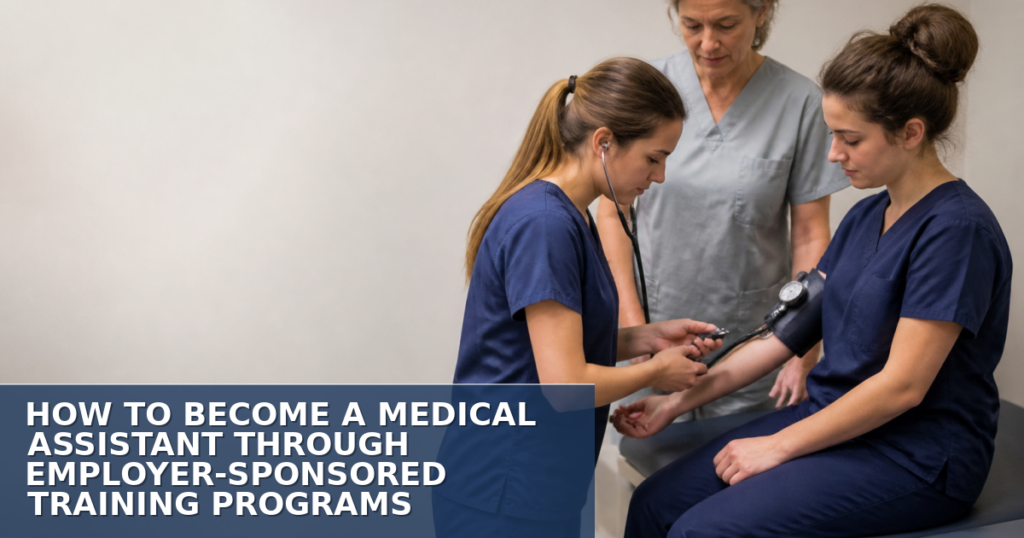
Under routine delegation, medical assistants may handle tasks such as rooming patients, answering phones, maintaining records, measuring vital signs, entering data into the electronic health record, and performing venipuncture when appropriately trained and supervised. You cannot accept verbal orders from licensed prescribers, but you may act on written orders for delegated tasks such as phlebotomy if you are otherwise qualified.
Medication administration is where Nebraska adds an extra step. The state takes the position that a medical assistant must register with DHHS as a medication aide before being delegated medication administration in outpatient settings. That registration does not require a separate exam, but it does require a competency assessment. So if you want a role that includes giving injections or other medications, check whether your program helps you meet that medication aide requirement.
Why certification still leads the way
Because Nebraska does not define a state credential, employers lean on national certification as the main signal of readiness. An accredited program plus a CMA, CCMA, or RMA credential gives you the clearest path to a medical assistant job in Omaha, even where the law leaves certification voluntary.