Medical Assistant Programs in Seattle: Your Local Guide
Compare accredited Seattle-area programs by cost, length, externships, and certification prep to find the right fit.
By Jennifer GubblerReviewed by Editorial StaffUpdated August 29, 202624 min read
Most important takeaways…
Seattle MA wages outpace the national median by roughly 25% after cost-of-living adjustment.
CMA certification requires graduation from a CAAHEP-accredited medical assistant program.
Clinical externship placement models differ: some schools assign sites, others do not.
Medical Assistant Schools in Seattle: What to Know Before You Enroll
Washington's move to formalize three distinct medical assistant credentials, MA-C, MA-R, and MA-P, means the program you choose directly affects which clinical tasks you can legally perform on day one. That regulatory detail matters more here than in states with a single, blanket scope of practice, where medical assistant certification requirements by state can be far less defined.
Seattle's major hospital systems, including UW Medicine, Swedish, Virginia Mason, and Kaiser Permanente, keep demand for qualified MAs consistently strong, reflecting a positive medical assistant job outlook nationwide. But the number of accredited in-city programs is small, so accreditation status, total cost, and schedule flexibility deserve close scrutiny rather than a casual scroll through options.
Seattle's Healthcare Landscape and Why MAs Are in Demand
Seattle’s healthcare ecosystem is one of the most concentrated and opportunity-rich in the Pacific Northwest, making medical assistants a linchpin in the region’s clinical workforce. When you train here, you are stepping into a city where large health systems, specialty clinics, and community hospitals run on the steady support of well-prepared MAs.
Where You’ll Train and Work
Five dominant employers shape the MA job market here: UW Medicine, Swedish Medical Center (part of Providence), Virginia Mason Franciscan Health, Kaiser Permanente Washington, and Seattle Children’s. These systems operate dozens of clinics, urgent cares, and hospital departments throughout the metro area. Their externship pipelines often start with students enrolled in local medical assistant training programs, so picking a school with established clinical partnerships inside those networks can translate directly into a job offer down the road.
A Scope That Goes Well Beyond Vital Signs
Washington gives medical assistants a notably broad clinical toolbox compared to many states. Under provider delegation, a certified medical assistant can administer injections, draw blood, run EKGs, and assist with minor procedures. This isn’t just a desk-and-vitals role. Because the scope is wide, the training needs to go deep, which is why program length and hands-on clinical hours matter so much. When you interview for programs, look for curricula heavy on practical lab time and real externships, not just textbook chapters.
Your Job Hunt Isn’t Limited to Downtown Seattle
While the city proper has the densest concentration of jobs, healthcare hiring spills into surrounding communities where cost of living can be lower. Bellevue, Renton, Tacoma, Everett, and Edmonds all house large clinics, hospital campuses, and specialty practices. Students who train in Seattle aren’t locked into a single zip code after graduation; the entire Puget Sound corridor offers demand. This geographic spread also means you can choose a program location that fits your commute, whether you live north, south, or east of the city center.
Which Credential Your Training Leads To
Washington organizes medical assistants into three tiers: Medical Assistant-Registered (MA-R), Medical Assistant-Certified (MA-C), and Medical Assistant-Phlebotomist (MA-P). An MA-R can be endorsed by a provider and requires no formal training or exam, but its scope is narrower and tied to a single employer.1 MA-C is the full-certification path and demands graduation from an approved program2 plus a national exam (the AAMA CMA, AMT RMA, or equivalent)3. MA-P focuses specifically on blood draws and requires completion of a dedicated phlebotomy training.1 The program you choose determines which credential you can qualify for, so if you want the broadest clinical options, target a school that prepares you for the MA-C exam.
CAAHEP Accreditation and CMA Exam Eligibility in Seattle
When you compare medical assistant programs in Seattle, the word "accredited" alone doesn't tell the full story. To earn the CMA (Certified Medical Assistant) through the AAMA, you must graduate from a program recognized by either the Commission on Accreditation of Allied Health Education Programs (CAAHEP) or the Accrediting Bureau of Health Education Schools (ABHES). Graduates of programs without one of these stamps simply aren't eligible to sit for the CMA exam. That makes accreditation the single most important filter when building your school list, especially if the CMA is your career target.
What CAAHEP Accreditation Means for Your Career Path
CAAHEP accreditation signals that a program meets rigorous, peer-reviewed standards for curriculum, faculty qualifications, and student resources. The process involves site visits and ongoing compliance reviews. For Seattle students, this translates to a curriculum aligned with national MA competencies, hands-on clinical training, and a clear path to CMA exam eligibility. Importantly, some employers in the region explicitly prefer or require candidates who hold the CMA, so choosing among caahep accredited medical assistant programs washington can open doors after graduation.
Seattle-Area Programs with CAAHEP Accreditation
Within a 15-mile radius of downtown Seattle, two programs carry current CAAHEP accreditation: Seattle Central College1 and Edmonds College2. Seattle Central's medical assisting program has a long-established reputation, and its graduates benefit from the school's deep ties to nearby hospitals and clinics. Edmonds College, located just north of the city, offers a CAAHEP-accredited certificate that includes an externship component. A third option, Pima Medical Institute in Seattle, holds ABHES accreditation3. While ABHES is an alternate pathway to CMA eligibility, it is not CAAHEP, so if your goal is specifically a CAAHEP-accredited experience, Pima does not fit that label. Other campuses like North Seattle College do not appear to hold CAAHEP or ABHES accreditation, meaning graduates would need to pursue certification routes other than the CMA.
CMA Pass Rates: What the Numbers Show
Actual exam performance can give you a sense of how well a program prepares students. Seattle Central College reports a five-year average CMA exam pass rate of 90.45% (2020, 2024)1, a figure that indicates strong preparation and student support. For the same period, Edmonds College has not published a pass rate, and Pima Medical Institute's ABHES-track outcomes haven't been disclosed publicly. While a high pass rate is encouraging, remember that numbers can reflect different years and testing cohorts; treat them as one data point among many.
From Enrollment to Certification: The Seattle MA Training Timeline
Every medical assistant's path is a bit different, but the core steps are well-defined. Here's what a typical Seattle training journey looks like, from first application to first day on the job.
Night, Weekend, and Online Options for Working Students in Seattle
For working adults and career changers, the biggest question isn't usually whether to become a medical assistant, it's how to fit training around an already-full schedule. In Seattle, flexible delivery options exist, but they come with trade-offs that are important to understand before you commit.
Seattle Central College: A Hybrid Program That Shifts by Quarter
Seattle Central's Medical Assisting program uses a hybrid format that mixes online coursework with face-to-face lab sessions.1 The catch? When you are on campus depends heavily on the quarter you start. For example, the Fall 2026 cohort (applications open March 1, 2026, and close in June, with acceptance in August for a late September start) meets in the evening.2 If you begin in winter or summer, expect morning classes; spring quarter brings afternoon sessions.1 This means you can plan around a consistent daytime job, but you cannot count on the same schedule year-round if you take a break and re-enter in a different term.
Evening availability: The fall start is the dedicated evening track, which may work for daytime workers, but it is not a standalone evening-only program throughout the year.
Online component: Lectures and some assignments are delivered online, reducing commute time, but hands-on clinical skills are practiced and tested in person during scheduled lab hours.1
What About Other Seattle-Area MA Programs?
For schools like Pima Medical Institute Seattle, North Seattle College, and Edmonds College, current schedule modalities could not be verified at the time of writing. Many MA programs in the region default to daytime delivery, though some occasionally pilot evening medical assistant classes or weekend cohorts. If you need a specific non-traditional schedule, call the program coordinator directly before applying. Do not assume flexibility exists without confirmation.
What "Hybrid" Really Means: Online Lectures, In-Person Skills
No medical assistant program in Washington state can be completed entirely online. The clinical medical assistant role requires competency in skills such as phlebotomy, injections, and EKGs, which must be demonstrated in person. Hybrid programs like Seattle Central's reduce seat time and let you learn theory from home, but they do not eliminate campus visits. Additionally, medical assistant externship hours, typically 160 to 200 hours, are always completed on-site at a clinic or hospital, regardless of how the classroom portion is delivered. Online does not mean zero campus presence; it means fewer trips per week and a different rhythm of study.
Side-By-Side: Tuition, Program Length, and Credentials Compared
Below is a side-by-side look at accredited medical assistant programs in the Seattle area. Costs shown are published program totals where available; note that net price after financial aid may be lower and varies by residency status and individual eligibility. Program lengths assume full-time enrollment and may be extended for part-time students.
School
Total Estimated Cost
Program Length
Credential Earned
Accreditor
Seattle Central College
$7,235.32
4 quarters (57 credits)
Certificate
CAAHEP
Edmonds College
Not available
3 quarters (44 credits)
Certificate
CAAHEP
Pima Medical Institute-Seattle
Not available
9 months
Certificate
Not available
Questions to Ask Yourself
Do you need the national CMA credential, or will Washington's MA-R designation get you hired?
Washington lets you work as a Medical Assistant-Registered without national certification, but many Seattle employers (Providence, UW Medicine, Kaiser) prefer or require the CMA. Check job listings in your target system before choosing.
Can you attend daytime classes, or do you need evenings and hybrid to keep working?
Most CAAHEP programs run daytime cohorts with weekday externships. If you cannot leave your current job, narrow your search to schools offering evening lectures or hybrid coursework upfront.
Is an associate degree worth the extra year over a certificate?
Entry-level MA pay in Seattle is similar for both credentials. The associate pays off mainly if you plan to bridge into nursing, healthcare administration, or supervisory roles later.
Externships and Clinical Partnerships in the Seattle Area
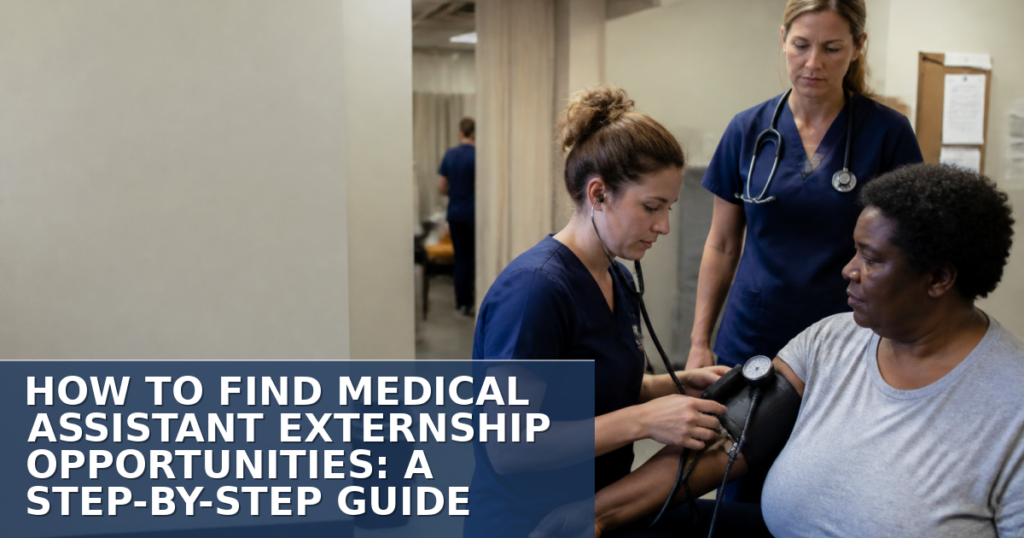
Schools with established hospital partnerships may place you directly at their affiliated sites, while others expect you to secure your own rotation. Understanding which model your prospective program uses can make the difference between a seamless clinical experience and weeks of stressful self-placement.
How Many Hours You Will Need
Most Seattle-area medical assistant programs require between 160 and 240 clinical hours before you graduate. Seattle Central College's Medical Assisting program mandates at least 160 hours of unpaid externship completed during your fourth quarter, spread across one or more ambulatory healthcare settings through their CMA 108 course. A follow-up practicum (CMA 109) offers additional hands-on time for students who want more exposure. Pima Medical Institute Seattle's Medical Assistant program also requires 160 unpaid externship hours, typically scheduled near the end of the program so you can apply classroom knowledge in a real clinical environment.
Where Students Complete Rotations
Seattle Central College places students at what they describe as every major hospital in the Seattle area, along with surrounding clinics. While the program does not publish a formal partner list, the broad network suggests students land at a mix of large health systems and community practices. Pima Medical Institute Seattle partners with Neighborcare Health, a federally qualified health center with multiple locations serving diverse patient populations across the metro. Beyond named partners, both schools coordinate placements at urgent care centers, specialty clinics, and physician offices throughout King County.
From Extern to Employee
Externships often function as extended job interviews. Many Seattle healthcare employers, including large systems like Swedish, Virginia Mason, and UW Medicine, routinely hire externs who perform well during rotations. Supervisors observe your professionalism, clinical skills, and ability to work with patients over several weeks, giving them confidence before making hiring decisions. If you impress during your 160 hours, you may receive a job offer before graduation day.
Questions to Ask Before You Enroll
Before committing tuition dollars, ask prospective schools for their current externship site list and recent placement rates. Programs with strong local partnerships typically share this information openly. If a school cannot name specific clinical sites or provide data on how many graduates were hired by their externship employers, consider that a warning sign. A transparent program will give you clarity on where you will train and how that experience connects to employment.
Admissions Requirements and Upcoming Start Dates
Open enrollment versus competitive admission: the distinction shapes your entire application timeline, and Seattle-area MA programs fall on both sides of that line. Knowing which model your target school uses can mean the difference between starting classes in a few weeks and waiting an extra quarter or two.
What Most Programs Ask For
While specific prerequisites vary, you can expect some combination of the following across Seattle-area medical assistant programs:
High school diploma or GED: This is the baseline for virtually every program.
Placement or entrance exams: Some schools require the TEAS, ACCUPLACER, or Wonderlic to gauge reading and math readiness. Others waive testing entirely.
Background check and immunization records: Clinical settings require both. Programs typically ask you to submit immunization documentation during the application process and complete a background check before your externship.
CPR certification: A few programs expect current CPR/BLS certification at enrollment; others build it into the curriculum.
Beyond these basics, certain schools ask for a personal statement, a letter of recommendation, or both. Check each program's admissions page directly, because requirements can shift from one enrollment cycle to the next.
Seattle Central College: A Closer Look
Seattle Central College offers one of the clearest application windows in the area. Its Medical Assisting Certificate program accepts 24 students per cohort2, with starts in both fall and spring3. For the Fall 2026 cohort, the application opened on March 1 and closes in June 20261. Applicants need to submit a personal statement, a letter of recommendation, and immunization records1. Notifications go out in August1, with classes beginning in late September1. The program runs four quarters and totals 57 credits2. Because cohort sizes are capped, this is a competitive admission process, so applying early within the window matters.
Other Seattle-Area Programs
Pima Medical Institute's Seattle campus, North Seattle College, and Edmonds College also serve students in the metro area. However, their 2026 admissions timelines and specific prerequisite details were not fully available at the time of writing. If you are considering any of these schools, contact their admissions offices directly for the most current start dates, entrance exam requirements, and application deadlines.
Plan Ahead
A good rule of thumb is to begin the application process two to three months before your target start date. Programs with limited cohort sizes, like Seattle Central's 24-student cap, can fill quickly. Gathering immunization records, scheduling any required entrance exams, and requesting recommendation letters all take time. If you miss one enrollment window, you may be waiting a full quarter or semester for the next opening. Start early, keep a checklist of each school's requirements, and confirm deadlines directly with the admissions office so nothing falls through the cracks.
What Medical Assistants Earn in the Seattle Metro Area
The most recent federal data, from May 2023, puts the median annual wage for medical assistants in the Seattle-Tacoma-Bellevue metropolitan area at $42,0001, matching the national median for the occupation. While the national medical assistant salary stands at that same benchmark, the Seattle area rewards experienced and specialized medical assistants with noticeably higher earning potential once you move up the pay scale.
Seattle Medical Assistant Earnings at a Glance
Based on the Bureau of Labor Statistics’ percentile breakdown for the metro area:
10th percentile: $33,500
25th percentile: $36,780
Median (50th percentile): $42,000
75th percentile: $47,220
90th percentile: $56,480
The average (mean) annual wage for Seattle-area medical assistants reaches $58,070, which is well above the national mean and signals that top performers and those pursuing medical assistant career advancement can push well past the median. While entry-level pay often starts in the mid-$30,000s, the numbers show a clear path upward.
What Program Graduates Report Earning
Federal College Scorecard earnings data, which would show what graduates of individual schools are actually earning one and two years after completing their programs, is not yet available for the accredited Seattle-area medical assistant programs covered here. That’s common for newer or smaller health professions programs where earnings cohorts aren’t large enough to report or haven’t matured. In the meantime, the metro-level wage data above gives a reliable picture of what you can expect in your first year on the job.
A Quick Look at Return on Investment
Medical assistant training in Seattle carries a relatively modest price tag, and the debt numbers track with that. Among the schools in our rankings, median federal student loan debt at completion ranges from about $7,900 to $15,000. Even if we conservatively project a first-year salary in the lower percentile range, debt-to-earnings ratios stay very manageable. For example, a graduate entering the field at $36,000 and carrying $10,000 in student loans is looking at a debt load that’s less than 30% of annual earnings, a position many bachelor’s degree holders would envy. When you layer in the robust overall demand across the Seattle healthcare market, the financial case for pursuing training here is a strong one.
Seattle's cost of living is undeniably high, but the local medical assistant wage premium still works in your favor. After adjusting for regional expenses, MAs in the Seattle metro area come out ahead of their peers nationally. That roughly 25 percent salary gap over the national median means your earning power here stretches further than the sticker price of city living might suggest.
Accredited Medical Assistant Programs Serving Seattle Students
These schools offer CAAHEP-accredited medical assistant programs that prepare students for certification and healthcare careers in the Seattle metro area. The list features both community colleges and private institutes serving students across King County.
How this list was built
Factors considered
CAAHEP accreditation status
Program completion data
Clinical externship availability
Graduate certification pass rates
Student support and flexibility
Sources
Internal program database
Independent program research
NCES-IPEDS federal institutional data — nces.ed.gov
Best for: Career changers seeking flexible hands-on training
Pima Medical Institute's Seattle campus has been training healthcare professionals since 1989. Its Medical Assistant Certificate program combines classroom instruction with hands-on labs and a clinical externship, supported by career services and a hybrid learning format. The school is an ETPL-approved provider, making it eligible for workforce funding programs.
Best for: South King County residents wanting accelerated study
Pima Medical Institute-Renton offers the same accelerated Medical Assistant training as its sister campus, just south of Seattle in Renton. Students complete a 9-month certificate with hybrid flexibility, gaining skills in phlebotomy, injections, and office procedures, plus a required externship. It serves South King County residents with convenient I-405 access.
Best for: Students needing academic support to succeed
Renton Technical College provides both a certificate and an associate degree in Medical Assisting through a hybrid format with day and evening classes. The program emphasizes student success with I-BEST academic support and a clinical practicum, all while aligning with CAAHEP standards. Graduates are prepared for national certification exams.
Edmonds College in Lynnwood offers a quick 3-quarter Medical Assistant Certificate that is CAAHEP-accredited and meets Washington state certification requirements. The hybrid program includes simulation lab practice and an externship, with dedicated advisors guiding students through the 44-credit curriculum.
Bellevue College's Medical Assistant Certificate of Achievement covers 74-82 credits with no prior healthcare experience required. The program meets all Washington State Medical Assisting law requirements and includes a practicum, preparing students for the state certification exam and for roles in outpatient clinics.
Lake Washington Institute of Technology (LWTech) in Kirkland delivers CAAHEP-accredited Medical Assisting training at both the certificate and associate degree levels. The programs feature small classes, hands-on experience, and a structured compliance process using Complio. Graduates are eligible to sit for the CMA exam.
Seattle Central College, located in the Capitol Hill neighborhood, runs a cohort-based Medical Assistant Certificate with fall and spring starts. The program boasts a 90% licensure pass rate and 98% graduate satisfaction, featuring a simulation lab and stackable design for future career advancement.
How to Choose the Right MA Program: A Practitioner's Checklist
After you've toured a few campuses and stared at enough tuition sheets, the programs start to blur together. Here's a five-point framework that cuts through the noise. Apply each test in order, and drop any program that fails one before moving to the next.
The Five-Point Filter
Accreditation: If the program isn't CAAHEP-accredited (or ABHES, for the RMA path) and you want to sit for the CMA exam, stop reading the brochure. It won't qualify you, no matter how polished the campus looks.
Total cost after aid: Ignore the sticker price. Ask the financial aid office for a personalized net-cost estimate including books, uniforms, exam fees, and background checks. If they won't put it in writing, that's your answer.
Schedule compatibility: Look at the actual class calendar for the next 12 months, not the marketing page. If evening clinical labs only run one night a week and you work that night, the program doesn't fit your life.
Externship placement quality: Ask where recent graduates externed and whether the school guarantees placement or leaves you to find your own. A program that places students at Swedish, Virginia Mason, UW Medicine, or Kaiser Permanente clinics is opening doors that a weaker network can't.
Visit every campus on your shortlist. Ask the admissions rep to introduce you to a current student or a recent graduate, and talk to them without staff in the room. Online reviews for vocational programs are notoriously unreliable: they skew toward the angriest and the most incentivized voices, and rarely reflect classroom reality.
One last thing. The cheapest or a fast track medical assistant program almost never wins on value in a market like Seattle. Saving $1,000 on tuition means nothing if your externship lands you at a low-volume urgent care instead of a major health system where hiring managers already know the school's name. Choose for the job you want two years from now, not the invoice you're staring at today.
Frequently Asked Questions About MA Training in Seattle
Choosing a medical assistant program comes with many questions. Below we answer the top queries prospective students in Seattle ask, including how long does it take to become a medical assistant,how long does it take to become a medical assistant program costs, online options, salaries, and externships.
QHow long does it take to become a medical assistant in Seattle?
AMost certificate programs take 9 to 12 months. For example, Seattle Central offers a 9-month track2, and Pima Medical Institute's program is about 9 months3. Associate degrees, like Highline College's, typically take two years4. Hospital apprenticeships at Seattle Children's5 or Fred Hutch6 blend work and study over roughly one year.
QHow much does medical assistant school cost in Seattle, WA?
ACosts vary widely. Seattle Central College's certificate is around $8,0007. Highline College charges about $4,740 per year for its two-year associate degree4, so the total is higher. Some private programs exceed $24,000.
QCan you complete medical assistant training online in Washington state?
AFully online MA programs are not typical in Washington. The most common hybrid options are apprenticeship models like those at Seattle Children's5 and Fred Hutchinson Cancer Center6, which combine online coursework with 2,000 hours of on-the-job clinical training over about a year.56
QWhat is the average salary for a medical assistant in the Seattle metro area?
ALocal data indicates the medical assistant salary in the Seattle-King County area is roughly $27 to $29 per hour.8 That is well above the national median, reflecting strong demand and a higher cost of living in the region.
QDo all Seattle MA programs include an externship?
ANot all programs require one. Many do, such as Seattle Central (160 hours unpaid)9 and Edmonds College (165 hours)8. Hospital apprenticeships involve extensive clinical hours. Some shorter certificate programs, like Pima Medical Institute's, may not explicitly list an externship component.