Most important takeaways…
- Part-time medical assistant programs range from 4 to 24 months long.
- CAAHEP or ABHES accreditation is required for most certification exams.
- BLS projects 12% job growth for medical assistants through 2033.
Find accredited, flexible programs designed for busy adults—earn your certification without putting your life on hold.
Roughly 112,300 medical assistant job openings are projected each year through 2033, according to the Bureau of Labor Statistics. Yet for working adults, the path to certification often collides with a packed schedule of shifts, childcare, and bills. Part-time and accelerated medical assistant programs now offer a way to earn a credential without sacrificing a paycheck. The flexibility is not a luxury; it is a direct response to an industry that cannot afford to turn away qualified candidates simply because they have adult responsibilities.
Working adults need programs that fit around their lives, not the other way around. The following schools offer part-time or accelerated medical assistant training programs that balance quality, flexibility, and real-world preparation. Here are our top picks for 2026, ranked from overall best to honorable mentions.
What separates a quality part-time medical assistant program from one that just takes your money? You cannot afford to guess. As a working adult, your time and tuition are precious, so you need clear standards to evaluate any program you are considering. Here is what to check before you enroll.
Accreditation is the non-negotiable starting point. If you plan to sit for the CMA (AAMA) exam, your program must hold accreditation from either the Commission on Accreditation of Allied Health Education Programs (CAAHEP) or the Accrediting Bureau of Health Education Schools (ABHES).3 Part-time enrollment does not disqualify you1: the AAMA confirms eligibility as long as the program itself is accredited. ABHES evaluates part-time tracks against an equivalent full-time baseline2, so the medical assisting curriculum standards remain the same. Always verify a program’s current status directly on CAAHEP.org or ABHES.org rather than relying on a school’s marketing claims.4
“Flexible” is a word programs love to use, but you need to dig into the details. Does the schedule align with your actual life? Evening classes may still conflict with family dinner or a second job. Weekend-only formats can be intense but leave weekdays free. Self-paced online programs offer the most control, but they require serious self-discipline. When comparing options, map your work hours, family responsibilities, and commute onto the program’s calendar. Look for concrete features like asynchronous coursework, recorded lectures, and clear attendance policies that accommodate last-minute shift changes.
Every reputable program includes clinical hours to gain hands-on medical assistant duties, typically 160 for CMA exam eligibility.1 This is where part-time students can hit a wall. Even if your coursework is evenings or online, clinical rotations often take place during normal business hours.1 The best programs offer flexible placement options, such as weekend clinical slots or multiple site choices near your home. Before you commit, ask how the school handles scheduling conflicts. If you must take unpaid time off from your job to complete clinicals, factor that into your total cost and timeline.
Part-time pricing is not always a simple fraction of full-time tuition. Some programs charge per credit, while others use a flat fee, so a longer timeline can increase your total cost. Additionally, federal financial aid often requires at least half-time enrollment, typically six credits per term. If you drop below that, you may lose eligibility. Check with the school’s financial aid office: ask whether part-time students qualify for the same scholarships, payment plans, or employer reimbursement programs. At medical assistant trade schools, these policies can vary widely. A lower per-semester payment can be deceptive if you end up paying more overall.
Working adults cannot put their lives on hold for a traditional academic calendar. Many part-time medical assistant programs now offer multiple start dates per year5, some as often as every month or on a rolling basis. This matters because if you miss a fall cohort, you might wait an entire semester to begin. Frequent start dates let you enroll when you are ready, align completion with job market hiring cycles, and avoid prolonged gaps between prerequisite courses and program entry. Look for programs with at least three start terms annually or a self-paced model5 that lets you begin immediately.
Not every "flexible" program is flexible in the same way, and picking the wrong format can leave you more stressed than a traditional schedule would. The real trade-off is structure versus speed: fully self-paced formats give you total control but demand serious self-discipline, while structured evening or weekend cohorts trade some flexibility for built-in accountability and a set finish line.
This format suits shift workers, night-shift nurses' aides, and anyone whose schedule changes week to week. You log in whenever you have an hour to spare. U.S. Career Institute and Penn Foster both run self-paced online tracks, and MedCerts offers a similar self-paced path built around the clinical medical assistant certification. Clinical Skills Institute and Advanced eClinical Training (ACT) go even faster, with some students finishing in as little as six weeks to three months depending on pace.3
Hybrid formats, including specialized hybrid ophthalmic medical assistant programs, pair online coursework with periodic in-person labs or clinical sessions, minimizing campus visits while still delivering hands-on skills practice. Rasmussen University and Mercy College both run hybrid medical assisting tracks, with Mercy's almost entirely online aside from required clinical components. American National University takes a slightly different approach, shipping an at-home lab kit so students practice basic skills before ever stepping on campus.1
If you work a standard 9-to-5, evening classes let you train without touching your daytime hours. Allen School of Health Sciences runs dedicated evening cohorts, and NYSMDA offers both evening and weekend tracks, which tend to work well for parents managing school pickups and weekday obligations.2 Stepful blends live online instruction with evening class times, giving working adults real-time instructor access without requiring a commute.
Here's the catch many students miss: a program labeled "online" isn't automatically part-time. Some online programs still pack a full course load into a compressed calendar. A genuinely part-time structure means a reduced load, often one or two courses per term, stretched over a longer timeline. Always check the actual weekly hour commitment, not just the delivery method, before enrolling.
Part-time programs expect regular weekly effort even if class times are flexible. If your schedule already feels maxed out, you may struggle to keep pace with assignments and exam prep.
Programs with set evening classes work well if your shifts are stable. If your hours change weekly, a self-paced or asynchronous format will prevent conflicts and missed deadlines.
Clinical skills labs, externships, and final exams can temporarily demand more of your time. Knowing whether a partner, family member, or friend can help with childcare or errands makes those periods far more manageable.
Self-paced online modules require strong self-discipline, while synchronous classes offer real-time feedback and peer interaction. Matching the format to your learning style helps you stay motivated through the entire program.
A self-paced online program can be completed in as little as 4 months, while a standard part-time evening schedule often takes 18 to 24 months,1 but plenty of options fall in between, tailored to working adults who need flexibility without dragging out their training for years.
The length of your medical assistant training depends on the format you choose and how many hours you can realistically commit each week. Here's how the most common paths compare:
No matter which pace you pick, clinical hours almost always come near the end and can add several weeks to your overall timeline. Most schools build the externship into the advertised duration, but if you need to schedule your placement around work shifts, the externship could stretch things out by a month or more. When comparing programs, ask whether the listed length includes all required clinical training so there are no surprises.
If you can devote 15 to 20 hours a week to your coursework, an accelerated or self-paced track gets you certified sooner, often within 6 to 9 months. If you have less free time, a standard part-time approach gives you breathing room, even though it takes longer. The key is to pick a timeline that keeps you moving forward without burning out, so you finish with both your certification and your sanity intact.
Working a full-time job while keeping a household running is hard enough; adding a medical assistant program on top can feel like you're attempting to juggle while running uphill. But thousands of working adults do it every year, and a few practical strategies make the difference between burning out and crossing the finish line.
Treat your classwork and study sessions the same way you treat a scheduled work shift. Block out specific hours on your calendar each week, and don't let other obligations colonize that time. Even two hours every Tuesday and Thursday evening, plus a Saturday morning block, can produce steady progress when you shield it from interruptions. Let your household know those hours are non-negotiable.
Online and hybrid programs built for working adults typically include academic coaching, peer discussion forums, and study groups. Use them. These aren't just decorations; they're accountability structures. Post a question when you're stuck. Join a virtual study group even if you normally prefer to work solo. The students who finish are often the ones who stay connected rather than trying to muscle through in isolation.
Long programs can become a grind if every achievement is invisible until graduation. Passed your first module? Finished your clinical skills check-off? Give yourself a small reward. Acknowledge the progress. The NHA CCMA exam voucher and credential are the big prize, but the small wins keep you moving when the initial excitement fades.
How do you fit 160 or more clinical hours into a schedule that is already packed with work and family obligations?
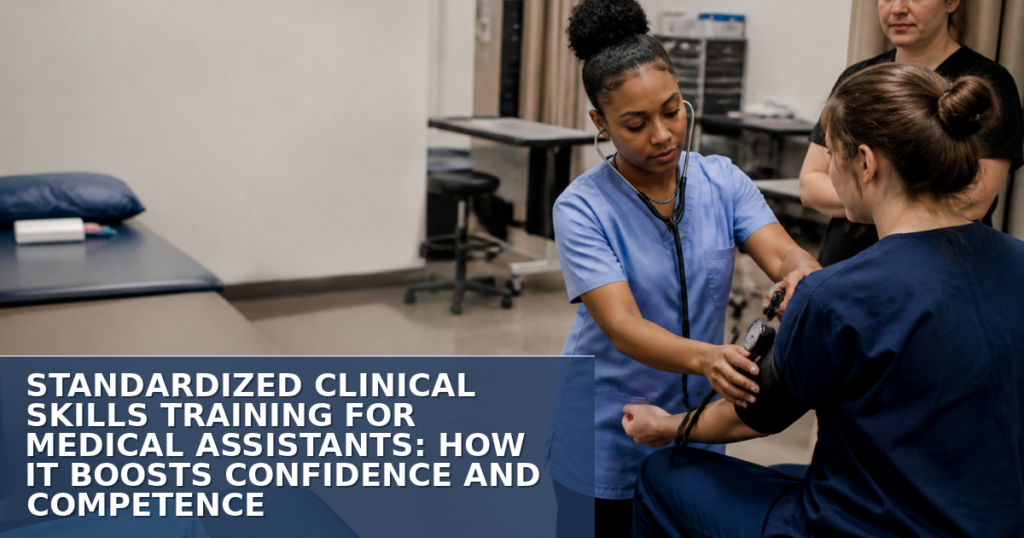
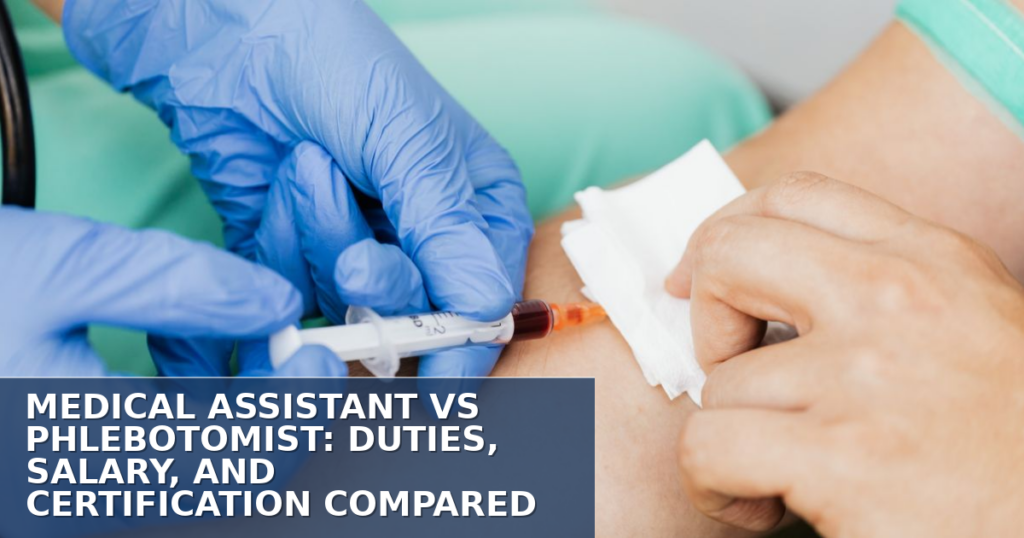
Every accredited medical assistant program requires hands-on clinical experience, whether you enroll full-time or part-time. There is no way around it, and you should not want to skip it: externships are where you practice drawing blood, taking vitals, running EKGs, and learning to move confidently in a real clinical setting. The challenge for working adults is not the requirement itself but how each school structures it.
Some schools go out of their way to accommodate nontraditional schedules, and some do not. That gap makes clinical scheduling one of the most important things to investigate before you commit.
Not every program is equally accommodating, and you need to ask direct questions before enrolling.
AIMS Education, for example, requires 195 clinical hours, and the majority of its internship sites operate during weekday business hours only, with very few evening or weekend options.1 Gurnick Academy's externship calls for 40 hours per week, Monday through Friday.2 Campus Sacramento runs day and night didactic cohorts, but the externship portion is full-time and unpaid regardless of which cohort you choose.5
Northwestern's Medical Assistant Program follows a similar pattern: nine months of part-time coursework followed by one month of full-time externship.3 If you cannot take a month away from your day job, that structure could be a dealbreaker.
Platforms like Stepful, which cater specifically to part-time learners, are transparent that students may still need to shift to regular daytime hours when clinicals begin.
Before signing anything, get clear answers to these questions:
Clinical scheduling flexibility is one of the biggest differentiators between programs that truly serve working adults and those that simply market to them. Dig into the details early so you are not caught off guard halfway through your training.
Wondering if the investment pays off?
Flexibility often carries a price, and part-time medical assistant programs are no exception. While spreading your studies over a longer period can feel gentler on your schedule, the total cost can sometimes exceed a full-time program's sticker price. Understanding the numbers, and the aid that can soften them, helps you decide if the trade-off is worthwhile.
Part-time programs typically charge per credit, and rates vary widely. Pueblo Community College lists its certificate in medical assisting at $175 per credit, totaling around $5,700 for the full program.1 In contrast, Mercy College of Health Sciences charges $420 per credit,3 and St. Louis College of Health Careers has a per-credit cost of $485, with an annual tuition of $15,520.4 These figures don’t always include fees for books, labs, or externships, so it’s important to ask for a full cost breakdown. MTTI’s evening program, for example, costs $17,350 in total and includes a $50 application fee and $100 for books across its 75-week duration.2
Many working adults worry that part-time enrollment disqualifies them from aid, but that’s often not the case. Federal Pell Grants and student loans are available to students enrolled at least half-time, which usually means 6 credits per term. School-based scholarships may also support part-time students, though eligibility criteria differ. Always check with the financial aid office early to confirm your status and explore payment plans that spread costs over several months.
If you’re already working in a healthcare setting, or even in a related field, your employer may offer tuition reimbursement. Many hospitals, clinics, and private practices will cover a portion of your program costs if you commit to staying with them after certification. This benefit can turn a $3,000 self-paced online program into a near-zero expense. Even if you’re not currently employed in healthcare, ask prospective employers during interviews whether they support continuing education.
To give you a concrete sense of the range:
Remember, the lowest price isn’t always the best fit. Factor in accreditation, clinical placement support, and whether the schedule truly works for your life.
Accreditation is the professional stamp of approval that tells employers and certification boards your medical assistant training meets national quality standards. Without it, you could spend months in a program that leaves you ineligible to sit for the certification exam, and unable to work.
The U.S. Department of Education recognizes two accrediting bodies for medical assisting programs: the Commission on Accreditation of Allied Health Education Programs (CAAHEP) and the Accrediting Bureau of Health Education Schools (ABHES). Graduating from one of their accredited programs is the most straightforward path to eligibility for the CMA exam offered by the American Association of Medical Assistants (AAMA).2 It also satisfies requirements for the Registered Medical Assistant (RMA) from American Medical Technologists (AMT) and the Certified Clinical Medical Assistant (CCMA) from the National Healthcareer Association (NHA). Currently, there are 565 CAAHEP- or ABHES-accredited medical assisting programs nationwide.1
A common misconception is that part-time tracks might have different, or lower, accreditation status than the full-time version of the same program. In reality, national accreditors do not differentiate by schedule. If a program is accredited, both full-time and part-time options fall under that same umbrella, provided the school has submitted the part-time track for review. However, some programs hold accreditation only for their full-time cohort. Ask the admissions office directly: "Is your part-time medical assistant program CAAHEP or ABHES accredited?" Look up the program on the CAAHEP online directory. Southwestern Illinois College3 and Minnesota West Community & Technical College4 are two examples where the entire medical assistant program (including part-time options) carries full CAAHEP accreditation.
Once you complete an accredited program, applying for certification is the same regardless of whether you studied evenings, weekends, or at your own pace. There are no additional steps for part-time graduates. You submit your program completion documents to the certifying body, receive authorization to test, and schedule your exam. The AAMA, AMT, and NHA all recognize graduation from an accredited program as the primary eligibility requirement, not the number of semesters it took you to finish.2
While national exam pass rates for part-time graduates are not systematically reported, individual programs may publish their rates. When researching schools, ask for the first-time pass rate on the CMA, RMA, or CCMA exam specifically for part-time students. A program confident in its curriculum will share this data openly. If the information is not available, consider it a yellow flag and weigh other options. Strong pass rates signal that the program’s flexible format doesn’t sacrifice the rigor needed to succeed on test day.
The Bureau of Labor Statistics projects 12% job growth for medical assistants through 2033, much faster than average, with about 112,300 openings each year driven by an aging population and expanding healthcare services.
A handful of well-established community colleges across the country quietly deliver flexible, part-time medical assistant training that fits working adults just as well as the better-known names. The schools below all hold regional accreditation and maintain programmatic approval that meets certification exam requirements, so you can trust the education will be recognized by employers.
All five programs are regionally accredited and report certification exam pass rates that meet industry benchmarks. Because each state sets its own scope-of-practice rules, it’s worth confirming how the program’s clinical hours align with local employer expectations. Part-time completion typically ranges from 12 to 18 months depending on how many credits you carry each term, but every school on this list lets you adjust the pace as life demands.
Working adults tend to have a lot of the same questions when they start exploring part-time medical assistant programs. Here are straightforward answers based on current program details, accreditation standards, and what we know about the job market in 2026.
Yes, many part-time programs are specifically designed for working adults. Evening, weekend, and hybrid formats keep weekly class hours manageable. For example, MTTI's evening program requires about 12 hours per week.4 The externship phase may need some schedule adjustments, but most programs work with students to find clinical sites that accommodate existing jobs.
They do. Most accredited programs require around 160 hours of hands-on clinical externship.5 Programs typically schedule these hours during daytime clinic operations, but many schools partner with multiple clinical sites so students can choose shifts that fit their schedule. Talk to the program coordinator early so you can plan ahead and, if needed, arrange time off from work.
In terms of medical assistant program length, part-time programs generally take between 6 and 24 months, depending on format and course load. Accelerated hybrid options like the University of Utah's Clinical Medical Assistant Program can be finished in 6 to 9 months. Longer evening programs, such as MTTI's, run about 75 weeks.4 The more hours you can commit each week, the faster you finish.
Tuition varies widely and is not always higher for part-time students. Some programs cost under $3,000 total. The University of Houston Downtown's online clinical medical assistant program, for instance, runs about $2,499,6 while Milwaukee Career College charges roughly $2,995.7 Longer or more intensive programs can cost significantly more, with some exceeding $15,000.8 Always confirm total costs including fees, supplies, and exam vouchers.
To sit for the Certified Medical Assistant (CMA) exam through the AAMA,7 you must graduate from a program accredited by CAAHEP or ABHES.8 Many part-time and hybrid programs hold one of these accreditations, so check before enrolling. Programs that prepare you for the Certified Clinical Medical Assistant (CCMA) credential may follow different requirements. Always verify accreditation status directly with the school.
Reputable online and hybrid programs are widely accepted by employers, provided they include real clinical training and carry proper accreditation from CAAHEP or ABHES. Employers care most about your certification, hands-on competency, and clinical experience. A fully online program with no in-person skills practice or externship component should raise a red flag, so look for programs that blend online coursework with supervised clinical hours.
In most cases, no. Externships typically require around 160 hours total,5 which can often be spread across several weeks or months. Some students use vacation time, reduce their work hours temporarily, or arrange evening or weekend shifts at their job during the externship period. Many programs help you find clinical placements close to home or work to minimize disruption.