Most important takeaways…
- Most accredited programs require a 100 to 200 hour clinical externship.
- Keep school, clinical, and paid work under 60 weekly hours total.
- New medical assistants typically earn between $37,610 and $48,160 yearly.
A practical breakdown of hour limits, program formats, clinical demands, and job types that protect your grades.
The tension in that January 2025 r/MedicalAssistant thread ("Study vs. Work?") is the same one most students face: pause the program to work full-time and cover tuition now, or stay enrolled and delay a paycheck that starts around $37,610 to $48,160 once you're certified, according to medical assistant salary data. The real variable is not motivation. It's phase. Lecture weeks, lab weeks, and a 160-hour externship each impose different ceilings on how many paid hours are actually possible, and the externship schedule is set by the clinical site, not by you.
Can you realistically hold a job while enrolled in a medical assistant training program? Yes, but the honest answer depends less on your work ethic and more on which phase of the program you're in.
During the didactic (lecture and reading) phase, most students can sustain 10 to 20 hours of paid work per week without their grades slipping. That range is the realistic part-time band. You're studying anatomy, medical terminology, pharmacology basics, and administrative procedures, which is heavy reading but flexible about when you do it. Evening or weekend shifts leave weekday classroom hours intact, and you can push study blocks into the mornings or late nights.
Work 30 or more hours a week and the risk profile changes. That's effectively full-time, and the margin for a bad week (a sick kid, a mandatory overtime shift, a rough exam) disappears. Some students pull it off. Most who try it either drop hours or extend the program.
Once you hit hands-on labs (injections, phlebotomy, EKG, sterile technique) and especially the unpaid medical assistant externship, the calculation shifts hard. Externships often run 160 to 200 hours over 4 to 8 weeks on a clinic's schedule, not yours. Full-time work on top of that is rarely sustainable.
A January 2025 Reddit thread on r/MedicalAssistant titled "Study vs. Work?" captured this tension well. Commenters called working while studying feasible but genuinely challenging, and several noted that clinical experience is valuable, particularly for students eyeing a medical assistant to rn bridge later. Nobody called it easy.
One more variable matters more than willpower: whether your program runs days, evenings, weekends, hybrid, or fully online. That format, covered in the table below, changes what "part-time work" can even look like.
Program format is one of the biggest factors in whether part-time work is realistic during medical assistant school. The table below compares what is published for several common scheduling models, including hybrid, online, full-time, part-time, day, evening, and weekend options. Externship hours often become the biggest constraint, especially when full-time weekday clinical schedules replace classroom time.
| Program Format | Typical Weekly Class + Lab Hours | Externship/Clinical Schedule | Part-Time Work Compatibility |
|---|---|---|---|
| Hybrid/blended (American Career College) | Not published as a weekly hour count; the program publishes total theory, lab, and clinical hours only | Not published in the available listing | Flexible blended format with online coursework and only 2 in-person days per week is more compatible with part-time work than a fully on-campus schedule |
| Day and evening classes with distance education (Gurnick Academy) | Two on-campus four-hour sessions plus distance education; total weekly hours not published | Not published in the available listing | Distance education and two on-campus four-hour sessions provide flexibility for students who work or manage other responsibilities |
| Full-time and part-time class options (LMAI) | Full-time: 6-hour class days; Part-time: 4-hour class days (weekly total not published) | Recommended externship is full-time, Monday through Friday, eight-hour days for eight weeks | Part-time class option is more compatible with work than full-time, but the externship requires full-time weekday scheduling |
| 100% online for the coursework portion (Stepful) | Two live 90-minute classes per week plus about 90 minutes of additional coursework per day | Not published in the available listing | Online delivery and asynchronous daily coursework are designed to be workable around other responsibilities, including part-time work |
| Morning, evening, and weekend schedules (Americation) | 15-20 hours per week | Not published in the available listing | The 15-20 hour weekly commitment and evening/weekend options make the program more compatible with part-time work than a standard daytime schedule |
| Day and evening options (Indiana Department of Workforce Development) | Not published | Includes 180 externship hours; the listing does not publish a specific weekly externship schedule | Not specified in the available listing |
Reliable national data on exactly how many medical assistant students hold jobs during their programs has not been published by major accrediting bodies. If you want real numbers, your best move is to contact your prospective school's admissions office directly, check CAAHEP or ABHES annual reports, review AAMA member surveys, or simply ask current students and alumni through LinkedIn or program info sessions.
A 160-hour clinical externship is the common finish line in many accredited medical assistant programs.1 Published totals often range from 100 to 200 hours, and broader program descriptions list 120 to 240.2 A few shorter programs may require only 40 to 80 hours.3 For 2026 planning, the typical load is still about 160 hours, delivered either as a compressed full-time block or through part-time medical assistant programs spread out over months.4
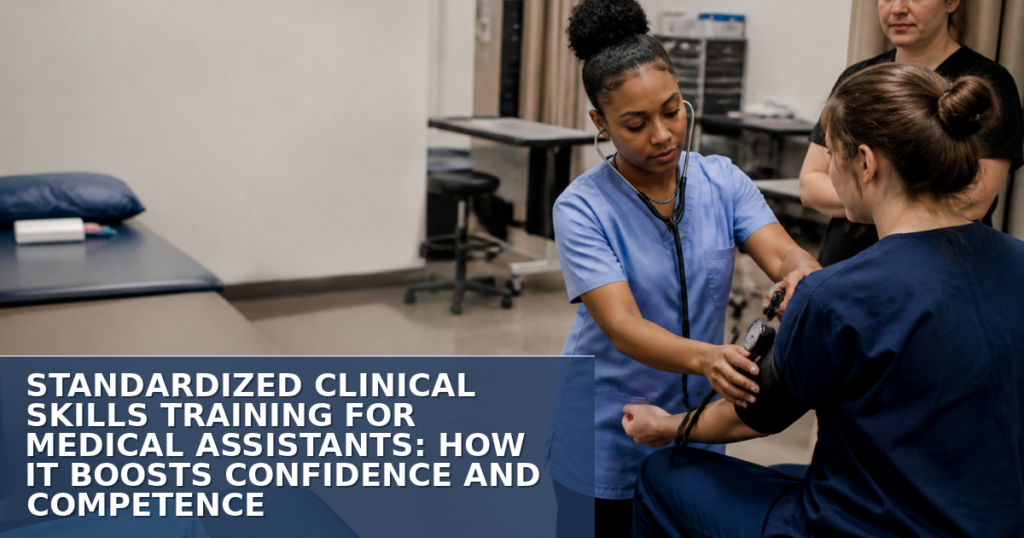
Most students compare class time against work shifts, but lab hours and medical assistant clinical skills check-offs are the hidden time sink. You might need to stay late for venipuncture practice, repeat a pulse or blood pressure station until an instructor signs off, and complete open lab sessions before you are cleared for clinical placement. Those hours are not always listed as a separate course on the calendar, so they reduce the evenings and weekends you planned to work long before the externship begins.
These clinical blocks are generally unpaid.5 You cannot be paid for the externship credit itself, although outside employment may still be allowed if your employer and program approve.5 The important condition is that your job has to flex around the clinic's schedule. If a preceptor needs you for an 8-hour day or a standard weekday shift, a rigid retail or office schedule will not survive the final term.
After the final clinical shift, CMA exam prep often begins immediately, and RMA review follows a similar schedule. Some programs require all externship hours to be completed before you sit for the certification exam, which means the weeks you thought were available for extra work are often spent reviewing clinical procedures, medical terminology, and administrative tasks. For AAMA CMA eligibility, the 160-hour externship is a standard requirement.1 While NHA CCMA programs do not always require one nationally, many schools still build clinical hours into the program anyway.
Yes, but only in a narrow sense. Evening, weekend, or self-scheduled jobs can fit if your program permits concurrent employment5 and your clinical preceptor's schedule allows it. If your job requires fixed weekday availability, the externship phase is where most students have to make a choice between finishing the program and keeping the shift.
The research-based ceiling is about 60 total hours per week for school, clinical, and paid work combined, with 80 hours as the hard maximum. Subtract your class, lab, study, and externship time before taking shifts. Red flags to cut back: sleeping under 7 hours, missing assignments, and feeling irritable or sick more often.

Externship hours are set by the clinical site, not by you. Once you're placed, the schedule is the schedule, and your job has to bend around it, not the other way around.
Start with a Sunday planning pass that treats clinical prep as non-negotiable. Block study time in 90-minute focused sessions rather than open-ended library hours. In each block, do one task: review vitals vocabulary, practice charting steps, or run through a set of dosage calculations. Batch your lab skills practice into one or two longer sessions each week instead of trying to practice for 10 minutes between classes.
Protect one fixed weekday for clinical medical assistant duties and skills practice. If Wednesday afternoons are always reserved for check-off practice or flashcards, you are less likely to lose that time to a shift pickup or family errand. Also pad every commute. Working allied health students commonly describe one to two hours of travel each way2, and some placement commutes are much longer3. If your externship has a 7:00 a.m. report time, the day may start hours earlier than the schedule suggests.
Employer flexibility around the medical assistant schedule during externships is not standardized.1 Some clinical sites and schools plan placement schedules well in advance, while others adjust start times with short notice. That means students need a direct, low-emotion way to ask for schedule changes.
You might say:
Keep the focus on coverage, not struggle. Offer a specific swap or a makeup plan before asking for flexibility. If the employer cannot adjust, ask your clinical coordinator whether placement dates or site assignments can be modified. Some schools require placement details or transport requests ahead of time, so asking early matters more than making the perfect ask.
Evening and weekend clinical hours create a different childcare problem than daytime classes. The most workable plans usually include more than one layer: a primary caregiver for the scheduled hours, a backup person for delays, and a family contact who can take over when the shift runs long.
Childcare evidence for evening and weekend allied health placements is thin, so treat any single arrangement as a starting point rather than a guaranteed fix. The goal is to have a schedule that survives a delayed handoff, a traffic backup, or a last-minute site change without tipping into medical assistant burnout or forcing you to choose between a grade and a child pickup.
Financial aid usually changes the work decision more than schedule advice does, because the real question is not whether you can earn money but whether you need to after grants, scholarships, and tuition assistance are counted.
The 2026-27 federal Pell Grant ranges from $740 to $7,395 depending on enrollment intensity, program length, and your financial situation.1 Part-time students receive a proportionally lower award, and shorter programs are prorated. Starting July 1, 2026, new Workforce Pell rules may allow some short-term medical assistant certificates of 150 to 599 clock hours over 8 to 15 weeks to qualify if the program meets completion, job placement, earnings, and operating history requirements.1 No separate application is needed; you still file the FAFSA. Traditional associate degree programs and longer Title IV-eligible certificates remain the clearest path to federal aid.
Medical assistant scholarships tend to be modest but useful; the AAMA Maxine Williams Scholarship, for example, requires a CAAHEP- or ABHES-accredited program, a 3.0 GPA, and completed coursework.2 State and local workforce funding often falls in the $3,000 to $8,000 per year range and can be stacked with Pell.1 Eligible military spouses may access up to $2,000 through MyCAA medical assistant programs for qualifying training. Employer tuition reimbursement varies widely, but it can also be stacked with scholarships. Some employers go further and provide employer sponsored medical assistant training in exchange for a work commitment.
Reduced course loads can feel less stressful, but they have a hidden cost: extra terms, added fees, delayed certification, and later access to certified medical assistant wages. Working full-time has the opposite risk when labs, clinicals, and externship hours conflict with a job. A break-even approach works better.
List the monthly gap you actually need to cover after Pell, scholarships, and tuition assistance. Do not build your work plan around the sticker price before aid. If your remaining gap is small, a 10 to 15 hour per week job may protect your completion timeline just as well as a full-time schedule. If the gap is large, ask whether employer reimbursement, a sponsored training program, or a short-term Workforce Pell eligible certificate changes the math before committing to full-time work. The goal is to protect certification speed without ignoring real monthly expenses.
New medical assistants typically earn close to the national median, with most falling between $37,610 and $48,160 per year.
Pre-certification work experience means any paid clinical or front-desk hours you log in a medical setting before you earn your CMA, RMA, or other medical assistant credential. It is real experience, and it carries weight, but it is not the same as certification. Understanding that difference helps you position yourself honestly on paper and in interviews.
Employers notice when a candidate has already roomed patients, handled vitals, navigated an EHR, or assisted with injections. According to the NHA Industry Outlook reports, the share of employers rating injection and immunization experience as important rose from roughly 41 percent to 69 percent over recent survey years.1 That kind of hands-on skill development is hard to fake.
Still, certification functions as a gatekeeper. NHA's 2023 data show that about 81 percent of employers require certification for medical assistant roles1, and a 2021 report found 88 percent either required or strongly encouraged it2. Working without a credential may land you a job at a smaller practice willing to train, which is the situation covered in work as a medical assistant without certification, but most larger clinics and health systems will expect certification before or shortly after hiring.
A recurring theme in online discussions among MA students, including a well-upvoted thread on r/MedicalAssistant, is whether pre-certification clinical hours improve your odds of getting into a nursing program later. The honest answer: there is no standard RN admissions rule that formally rewards uncertified MA work over certified work. Any documented patient care experience still strengthens a nursing application. If your long-term goal is to become an RN, review the medical assistant to RN pathway before deciding. Pausing your MA program to work uncertified may give you useful exposure, but it also delays the certification that opens more doors and higher pay.
When listing pre-certification positions, follow standard medical assistant resume guidance and be specific about the clinical skills you performed rather than leaning on a vague job title.
Pre-certification work shows initiative, and it can set you apart from candidates who have only classroom hours. Just do not mistake it for a replacement for credentialing. The strongest position when you start applying is certified with clinical experience already on your resume.
A healthcare-adjacent side job and a totally unrelated gig both put money in your pocket, but one also builds the clinical vocabulary, patient-contact comfort, and professional references you will need the moment you finish your program. If you have to work anyway, stacking experience alongside income is the smarter play.
This is probably the most accessible option for students who have not yet earned certification. You learn medical office assistant duties: scheduling software, insurance terminology, and patient intake workflows, without the clinical responsibility that a certified MA carries. Pay typically falls in the $15 to $29.51 per hour range1, schedules are often flexible weekday hours, and you usually report to a single clinic site, which keeps your commute predictable. If you have kids, that single-location consistency matters more than a slightly higher wage somewhere else.
For students weighing medical assistant vs phlebotomist, many outpatient labs and urgent care clinics hire part-time phlebotomy aides or specimen processors. The role builds direct patient-contact hours and gets you comfortable with clinical protocols. Pay generally lands in the $16 to $26 per hour range2, and part-time evening or weekend shifts are common. Some states allow phlebotomy work with only a short certification, which you may be able to complete alongside your MA coursework.
Some clinics specifically hire uncertified "MA trainees" at a lower starting rate, often $16.63 to $21.35 per hour2, with the understanding that you are still in school. These positions usually require weekend or evening availability, which can actually help you avoid conflicts with daytime classes. The downside is that multi-site float roles add commute unpredictability, so ask whether the position is based at one location before accepting.
This hybrid role blends medical assistant administrative duties with patient interaction: care follow-ups, referral tracking, and appointment coordination. Positions commonly run 20 to 25 hours per week at roughly $19 to $24 per hour1. Because the work is largely phone and computer based, some employers allow partial remote scheduling, a real advantage if you need flexibility around childcare or class times.
Prioritize three factors in this order: schedule compatibility with your program, single-site commute (especially if childcare is in the mix), and relevance to your future MA role. A front-office receptionist job at one clinic three blocks from your school will do more for your sanity and your resume than a higher-paying float position that sends you to a different location every shift. As discussed on threads like the r/MedicalAssistant "Study vs. Work" post, students who pick roles that reinforce what they are learning in class tend to feel less like they are splitting their energy and more like they are doubling it.